
Sickle alfalfa
Medicago sativa L. subsp. sativa
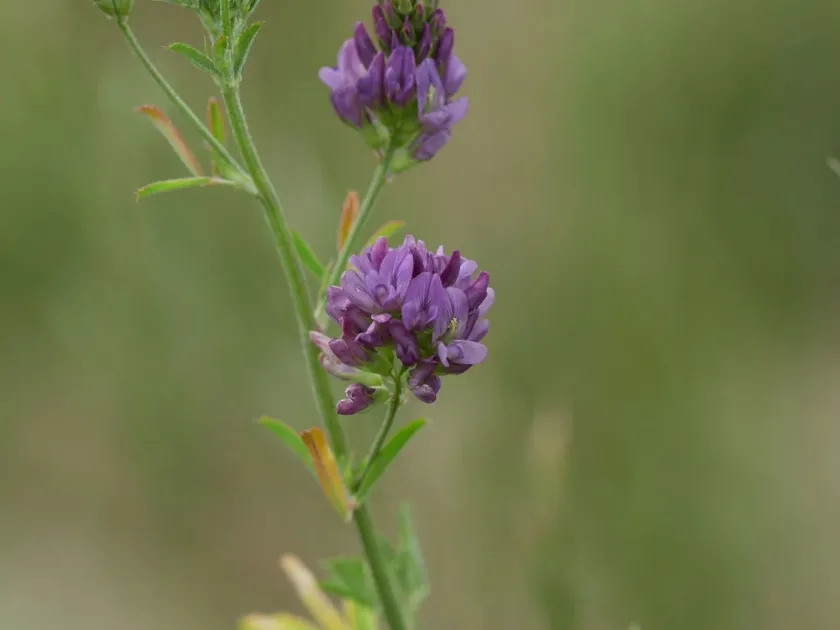
Description
Sowing dates
Sowing of sickle alfalfa (Medicago falcata) is typically carried out in early spring as soon as soil temperatures reach approximately 6-8 degrees Celsius. This timing allows the crop to take full advantage of spring soil moisture for rapid establishment.
Late autumn sowing is also a viable option in specific climates, providing an early start to the following growing season. In this approach, seeds are planted just before the onset of winter dormancy to prevent premature germination.
The seeding rate varies significantly based on the intended use. For forage production, rates range from 12 to 16 kg per hectare using a standard row drill. For seed production, lower densities of 4-6 kg per hectare are preferred to allow for better plant development.
Proper planting depth is essential, generally ranging from 1 to 3 centimeters depending on the soil texture. Lighter sandy soils require deeper planting to ensure sufficient moisture, while heavier clay soils require shallower depth to avoid hindering emergence.
After seeding, field rolling is highly recommended to improve soil-to-seed contact. This practice creates a firm seedbed, which significantly increases the germination rate and ensures a uniform stand of the crop across the entire field.
Growing requirements
Sickle alfalfa is a member of the Leguminosae family, renowned for its exceptional winter hardiness and drought tolerance. Its biological resilience makes it an ideal candidate for cultivation in challenging environments and cold northern regions.
The crop performs best on well-drained, fertile soils including chernozems and chestnut soils. It shows poor tolerance for acidic conditions and waterlogged soils where root rot can quickly become a limiting factor for plant health.
A distinctive feature of this plant is its deep, extensive taproot system. This allows the alfalfa to access groundwater stored deep within the soil profile, ensuring growth and biomass production even during periods of significant moisture deficiency.
As a heliophilous species, sickle alfalfa requires full sun exposure to reach its maximum yield potential. Shaded areas lead to spindly growth, reduced leaf production, and lower overall nutritional content in the harvested fodder.
Maintenance of soil fertility through phosphorus and potassium applications is essential for long-term stand survival. Additionally, regular monitoring of soil pH is advised to ensure conditions remain optimal for symbiotic nitrogen-fixing bacteria.
Yield
The yield potential of sickle alfalfa depends on the number of cuts per season, which typically ranges from 2 to 3. With proper management and fertilization, the stand can remain highly productive for many years.
On average, growers can expect dry matter yields between 4 to 8 tonnes per hectare. The high protein content makes this crop a superior choice for livestock feed, effectively improving the overall quality of any forage-based ration.
Botanically, the species is identified by its sickle-shaped pods. It is highly valued not only for its feed quality but also for its ability to regrow rapidly after mowing, making it a reliable source of green mass throughout the summer months.
In addition to fodder, the crop is an excellent soil improver. It fixes atmospheric nitrogen, reducing the need for synthetic nitrogen fertilizers in subsequent crops within the rotation cycle, thereby promoting sustainable agricultural practices.
Effective management for seed production requires careful attention to site selection and local pollinator populations. Ensuring that the fields are protected from harsh winds can significantly enhance the seed set and overall profitability of the enterprise.
Main diseases and pests
Common diseases affecting this crop include Fusarium wilt, Ascochyta leaf spot, and powdery mildew. These are primarily managed through crop rotation, adequate spacing, and ensuring that fields are not prone to prolonged standing water.
Key insect pests include the alfalfa weevil and various species of plant bugs. These insects feed on buds and stems, which can severely impact both the quality of the green mass and the total yield of the seed harvest.
Integrated pest management strategies are crucial for minimizing damage. This includes the use of resistant varieties, timely harvesting to disrupt pest life cycles, and the promotion of natural predator populations within the field environment.
Strict adherence to a minimum 5-6 year interval between alfalfa crops on the same site is essential to prevent the buildup of soil-borne pathogens. This simple practice is one of the most effective tools for maintaining long-term field health.
Insecticide use must be carefully timed, especially during the flowering period, to protect bees and other essential pollinators. Always prioritize the use of selective products that are less harmful to beneficial insect species.
Harvesting
The optimal time for hay harvesting is at the early flowering stage. Cutting at this specific physiological moment balances total biomass production with the highest possible concentration of protein and essential nutrients.
When mowing, it is critical to maintain a stubble height of 5-7 centimeters. This height protects the plant's crown and promotes faster regrowth, while also ensuring that the plant retains enough energy reserves to survive the winter months.
For efficient hay drying, mechanical conditioning is recommended to bruise the stems and facilitate faster moisture loss. This process is vital to preserve the crop's color and nutritional value, particularly its beta-carotene content.
Seed harvest is typically performed using direct combining once the pods have turned a dark brown color. Timing is crucial to avoid shattering losses; the combine settings must be precise to separate seeds without causing excessive mechanical damage.
Once harvested, seeds must be cleaned and dried to a moisture content of 12-14%. Proper storage in cool, dry, and well-ventilated conditions is required to maintain high germination rates for future planting seasons.