
Chinese mallow
Malva verticillata L. var. verticillata
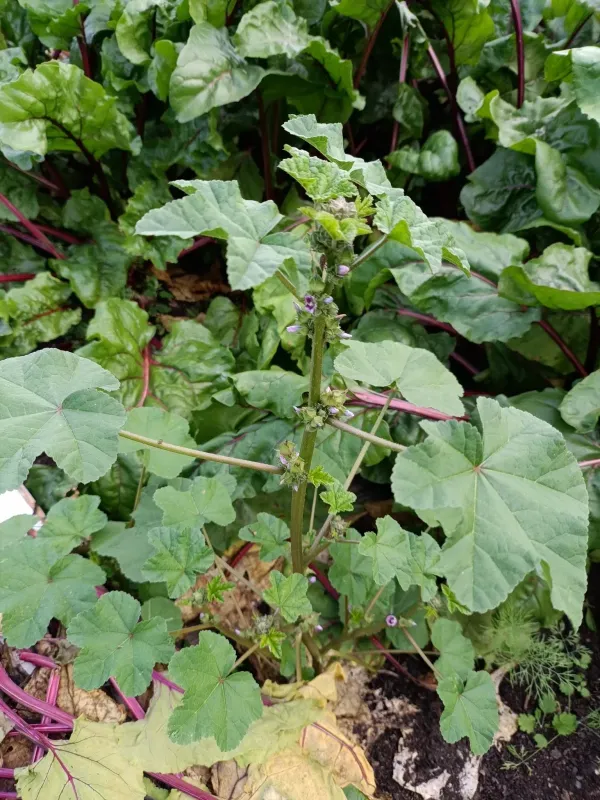
Description
Sowing dates
Chinese mallow (Malva verticillata) is an annual or biennial plant belonging to the Malvaceae family. Sowing is carried out in early spring when the soil warms up to 8-10 degrees Celsius, as the crop exhibits high germination rates under moderate temperatures.
The optimal planting pattern involves row spacing of 45 to 60 centimeters to provide sufficient growing area for each plant. The sowing depth should be 1.5–2 centimeters to ensure uniform and rapid emergence in field conditions.
To achieve maximum green mass yield, it is recommended to use row seeding with a sowing rate of about 8-12 kilograms per hectare. When cultivating for seeds, seeding rates can be reduced to improve aeration between plants.
The crop is characterized by rapid initial growth, which allows it to effectively suppress weed competition in the early stages of vegetation. In regions with a mild climate, late-autumn sowing is possible, allowing for the early harvest of nutritious greens.
Mallow seeds retain viability in the soil for several years, which must be considered when planning crop rotations. It is important to avoid compacting the topsoil layer before sowing to ensure proper root system development.
Growing requirements
Chinese mallow prefers fertile, loamy, or sandy-loam soils with a neutral to slightly acidic pH. The plant is quite demanding regarding moisture levels, especially during the period of active leaf mass accumulation.
For successful cultivation, well-lit sites are necessary as the crop is light-loving and does not tolerate heavy shading. While it can withstand short periods of drought, productivity increases significantly with consistent irrigation.
An important factor is the availability of sufficient nitrogen and potassium in the soil to support the formation of succulent foliage. The application of organic fertilizers during autumn tillage is recommended to improve soil structure and nutrient balance.
The optimal temperature range for the crop's development is 18–25 degrees Celsius. Mallow has moderate cold tolerance, allowing it to survive light spring frosts without significant loss of yield potential.
Under intensive farming conditions, it is crucial to follow crop rotation, avoiding planting mallow after other Malvaceae family members to prevent the accumulation of specific soil-borne pathogens.
Yield
The green mass yield of Chinese mallow under favorable conditions reaches 30–50 tons per hectare per season. This metric depends heavily on the number of cuts, as the plant possesses a strong ability to regrow quickly after harvesting.
Depending on the agricultural background and cultivar characteristics, three to four cuts can be performed in a single season. Each subsequent cut provides high-quality forage mass rich in protein and essential minerals.
Seed yield averages 0.5–1.2 tons per hectare. To obtain high-quality seed material, timely harvesting is required to prevent seed shattering during the maturation phase.
When used as a vegetable crop, the yield of marketable leaves is approximately 15–20 tons per hectare. Quality is determined by the timeliness of the harvest, as the stems become tough and fibrous if left to overmature.
Economic efficiency of cultivation is improved by utilizing specialized machinery for mechanized harvesting of green mass, which minimizes crop losses and labor costs.
Main diseases and pests
The most common disease is mallow rust, which affects leaves by forming characteristic pustules and reducing photosynthetic activity. To control the disease, it is recommended to use resistant varieties and maintain spatial isolation.
Among pests, leaf-eating insects, including leaf beetles and various species of aphids, pose the greatest threat. They can significantly reduce the ornamental value and nutritional quality of the foliage if left unchecked.
Powdery mildew may affect crops in conditions of high air humidity and poor ventilation. Preventive measures include thinning the stands and applying phosphorus-potassium fertilizers.
Nematodes can damage the root system in monoculture conditions or when irrigation technology is compromised. Regular rotation of planting fields is the primary method of defense against soil pathogens.
When pests are detected in vegetable plantings, the use of biological preparations is recommended, as the application of strong insecticides on forage or food crops is strictly limited.
Harvesting
Harvesting for green mass is conducted during the budding phase, when the plant contains the highest concentration of nutrients. Delaying the harvest leads to stem coarsening and reduced palatability for livestock.
Mechanized mowing is performed at a height of 5–8 centimeters from the soil surface to stimulate subsequent branching and regrowth of lateral shoots. Harvesting is optimal during morning hours after the dew has evaporated.
When grown for seeds, harvesting begins when the lower seed pods turn brown, while the upper parts still retain some moisture. A multi-stage harvesting approach is used, involving pre-cutting into windrows for maturation.
The harvested crop requires prompt transportation and processing, as freshly cut mass is prone to rapid self-heating. When ensiling, it is critical to follow proper compaction techniques to exclude oxygen.
Post-harvest residues are recommended to be tilled into the soil as green manure, which contributes to fertility restoration and improves the physical properties of the topsoil.