
Common mallow
Malva sylvestris L.
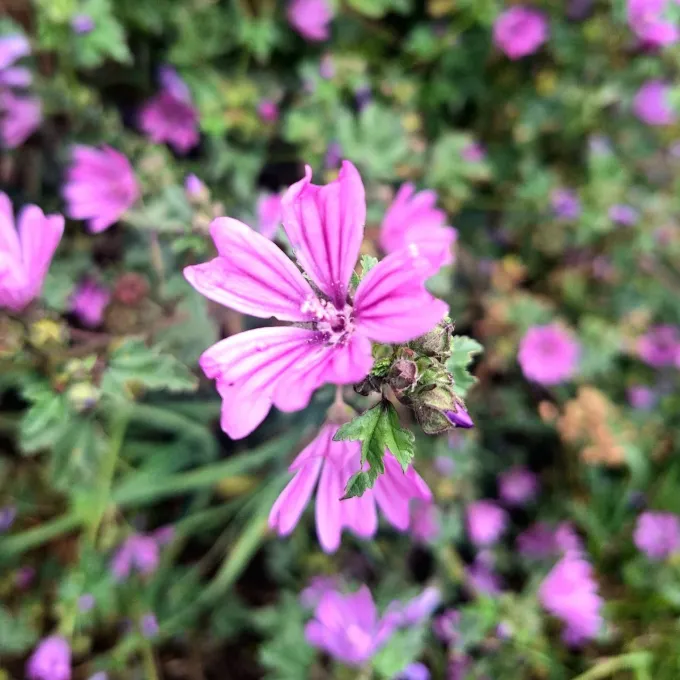
Description
Sowing dates
Seeds of common mallow are typically sown directly into the soil in early spring once the threat of frost has passed. They require a sunny location and well-prepared, friable soil to ensure successful germination and early growth.
For better results, pre-soaking the seeds in lukewarm water for 12 hours before planting can significantly increase the emergence rate. Sowing depth should be kept between 1 and 2 centimeters to ensure adequate moisture retention.
Planting in rows with a spacing of 50 centimeters is recommended for easier maintenance. This distance provides enough room for the plants to spread and allows for sufficient airflow, reducing the risk of fungal issues.
Seedlings usually emerge within two weeks. Once they reach the three-leaf stage, thinning is necessary to provide each plant with enough space to develop its taproot system fully.
Autumn sowing is also possible in milder climates, allowing for earlier establishment of plants in the following season. This method produces more robust plants that can better withstand early summer droughts.
Growing requirements
Common mallow is a sun-loving plant that thrives in open areas. Exposure to direct sunlight is crucial for the development of healthy flowers, which are the main focus of commercial cultivation.
The plant prefers fertile, loamy soils with good drainage. While it can adapt to various soil types, extremely waterlogged areas must be avoided to prevent root rot and poor development of the foliage.
Watering management is vital, especially during the flowering stage. Consistent moisture levels encourage continuous blooming and higher quality yields of both flowers and leaves for medicinal use.
Soil nutrient status should be managed through organic amendments like compost or well-rotted manure before sowing. Supplemental potassium fertilizers during the growing season enhance flower production.
Temperatures between 18 and 25 degrees Celsius are ideal for growth. Common mallow is quite resilient, but protection from extreme wind and cold snaps is recommended to maximize the plant's productive lifespan.
Yield
Yield is primarily measured by the total weight of harvested dried flowers and leaves. A well-managed plantation can produce a significant biomass yield, often exceeding 1 ton of dried material per hectare.
The yield potential is highest during the second year of cultivation. As a perennial crop, mallow demonstrates vigorous growth and increasing production capacity in its second and third years if properly maintained.
Continuous harvesting of flowers throughout the growing season encourages the plant to produce new blooms. This cycle is critical for maximizing the total output per individual plant during the summer months.
Seed harvesting can be mechanized on larger farms, contributing to the overall farm efficiency. Seed quality is maintained by selecting the strongest plants for the next generation of sowing.
Effective weed control is the most significant factor in maintaining high yield levels, as competitive weeds can easily suppress mallow growth in its early stages of development.
Main diseases and pests
Rust disease is a common problem for common mallow, appearing as orange-brown spots on the leaves. It thrives in high humidity and requires proper spacing and leaf sanitation to keep under control.
Powdery mildew can affect the plants during dry spells with heavy night dews. A white, dusty coating on the leaves indicates the presence of the fungus, which needs immediate attention to prevent foliage damage.
Aphids are the most common pests that target the soft tissues of the mallow plant. Integrated pest management, including the use of beneficial insects, is often sufficient to keep aphid populations below economic thresholds.
Root-knot nematodes can sometimes cause issues in soil that has not been properly rotated. Crop rotation with non-host species is the best long-term prevention strategy for any farming operation.
- Regular inspection of the lower leaf surfaces is vital for early pest detection.
- Proper removal of crop residues post-harvest limits the wintering grounds for pathogens.
Harvesting
Flowers should be harvested when they are fully open but not yet wilting. Hand-picking is the most effective method, ensuring that only high-quality, vibrant flowers are collected for processing.
Leaf harvesting is done before the flowering peak, selecting healthy and undamaged leaves. Harvesting early in the morning, once the dew has evaporated, ensures the highest concentration of plant compounds.
Handling the harvested material requires care to avoid bruising. Placing the flowers in airy containers immediately after harvest prevents them from heating up and degrading in quality.
Drying must be conducted in the shade with excellent ventilation. Maintaining temperatures below 40 degrees Celsius is essential to preserve the vibrant color and medicinal properties of the flowers.
Storage should occur in airtight containers placed in dark, dry locations. This protects the dried product from environmental moisture and light, which are the main causes of active ingredient loss.