

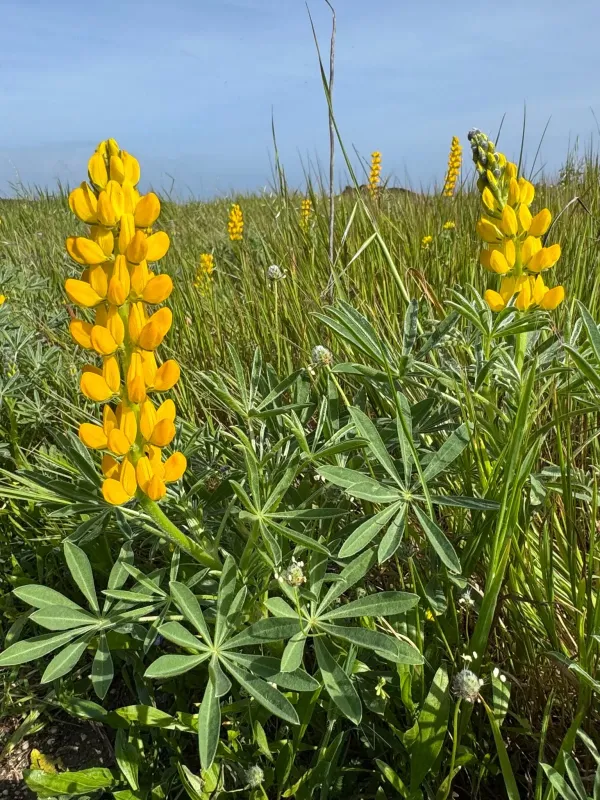
Description
Sowing dates
Crop rotation and precise sowing dates are critical factors for achieving optimal yields when growing yellow lupin. Typically, the crop is sown in early spring as soon as the soil is workable and reaches a temperature of 5–7°C.
Early planting allows the plants to efficiently utilize the soil moisture accumulated during the winter, which is essential for successful germination and initial development.
Delaying the sowing process significantly increases the risk of infestation by pests, such as the lupin fly, and can lead to a decrease in overall biomass production.
The seeding rate varies depending on soil conditions and regional climate, generally ranging from 0.8 to 1.2 million viable seeds per hectare for row planting.
Seeds should be planted at a depth of 3 to 5 centimeters to ensure consistent emergence and to establish a strong root system right from the beginning of the growth cycle.
Growing requirements
Yellow lupin is a herbaceous annual plant belonging to the Fabaceae family, known for its ability to thrive in poor, acidic sandy soils where other legumes might fail.
The crop requires well-drained soils and is highly sensitive to waterlogging, as excessive moisture can inhibit root respiration and lead to crop failure.
The plant features a deep taproot system, which helps it access nutrients and water from deeper soil horizons, making it highly efficient in nutrient uptake.
It prefers sunny locations and performs best in moderate climates, although it exhibits significant resilience against cool temperatures during the early stages of growth.
Optimal growth temperatures for the plant range from 15 to 22°C; extreme heat combined with drought can delay flowering and reduce overall yield potential.
Yield
The average seed yield of yellow lupin ranges from 1.5 to 2.5 tonnes per hectare, depending on soil fertility, variety, and the level of agricultural management.
When cultivated for biomass, the plant produces significant amounts of high-protein forage, reaching yields of 20 to 35 tonnes of green mass per hectare.
Yield results are heavily influenced by the successful inoculation of seeds with specific nitrogen-fixing bacteria, which significantly boosts crop performance.
Applying phosphorus and potassium fertilizers can improve both the yield and the quality of the harvested seeds, especially in soils lacking sufficient minerals.
Modern determinate varieties offer higher yield consistency and more uniform maturity, which simplifies harvest operations and reduces field losses significantly.
Main diseases and pests
Fusarium wilt is one of the most destructive diseases for yellow lupin, affecting the vascular system and often resulting in rapid wilting and total crop loss.
Anthracnose is another critical threat, causing necrotic spots, stem distortion, and potentially killing the plants if infections spread during the flowering period.
The lupin fly is the primary pest, as its larvae target the terminal bud and developing stems, which leads to plant deformation and reduced overall vigor.
Aphid populations can cause direct damage by feeding on plant sap and can also act as vectors for various plant viruses that negatively impact grain quality.
- Use high-quality treated seeds to prevent soil-borne diseases.
- Implement strict crop rotation schedules with a 4–5 year break.
- Select and plant cultivars that possess genetic resistance to anthracnose.
- Conduct regular field scouting to apply timely fungicidal treatments.
Harvesting
Harvesting for seed is best performed when 75–80% of the pods turn brown and the moisture content of the seeds drops to approximately 16–18%.
Because pods are prone to shattering when fully dry, farmers often employ a two-stage harvesting process: swathing followed by picking up the crop with a combine.
When using a direct combine harvest, it is vital to adjust drum speed carefully to avoid damaging the seeds, which have a relatively fragile outer coat.
Once harvested, the grain should be cleaned and dried immediately to avoid mold development and to maintain its high germination rate for future seasons.
When using lupin as green manure, the crop should be incorporated into the soil during the peak flowering stage to maximize the nitrogen content returned to the earth.
Content graph
Connections · Yellow lupin
Most often together:
Marketplace