

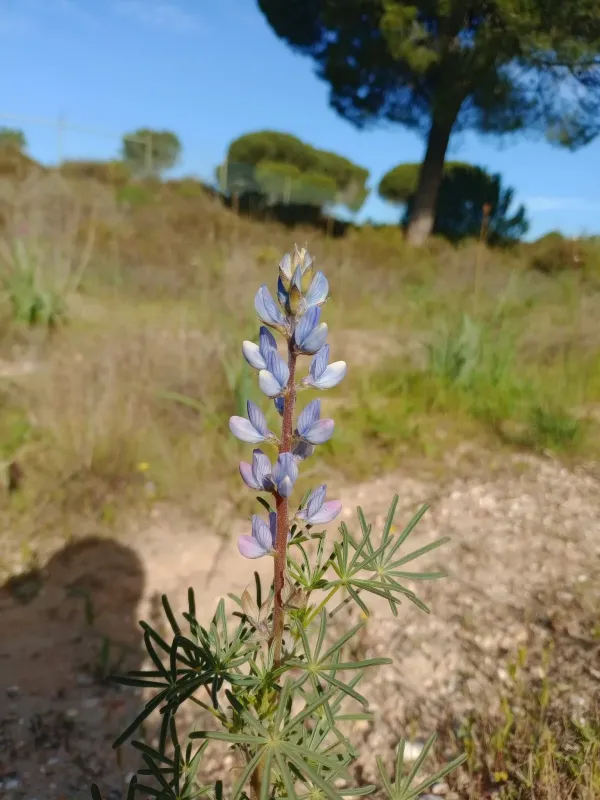
Description
Sowing dates
Narrow-leaf lupin is a cool-season crop, making it ideal for early spring sowing as soon as the soil temperatures reach 4–6 degrees Celsius. Early planting allows the crop to establish a deep root system and maximize the utilization of winter soil moisture before the onset of summer heat.
The optimal seeding depth is 3–4 cm in sandy soils and 2–3 cm in heavier soils. Precise control of planting depth is crucial to ensure rapid, uniform emergence, which helps the crop compete effectively against weeds during the vulnerable early stages of growth.
For grain production, a row spacing of 30–45 cm is typically recommended to allow for mechanical weed control, whereas a standard drill spacing is sufficient for forage or green manure crops. The seeding rate usually ranges from 1.0 to 1.5 million viable seeds per hectare depending on the target use.
Inoculation with specific Bradyrhizobium lupini strains is a critical step in narrow-leaf lupin cultivation. Proper inoculation ensures effective nitrogen fixation, which significantly reduces the need for synthetic nitrogen fertilizers and contributes to long-term soil health improvement.
The seedlings exhibit good frost tolerance, capable of surviving temperatures down to -6 degrees Celsius. This resilience allows producers to schedule planting early, reducing the risk of heat stress during the critical flowering and pod-filling stages later in the season.
Growing requirements
Narrow-leaf lupin is a versatile legume that thrives on acidic, light-textured soils where other crops often struggle. It is particularly well-suited for sandy or loamy-sand soils, displaying an excellent ability to tolerate low soil fertility and acidic conditions with a pH range of 5.0 to 6.5.
While the crop is known for its drought tolerance due to its deep taproot, it still has moisture requirements, especially during the flowering and pod-filling phases. Adequate water availability during these peak demand periods is essential for maximizing yield potential and seed size.
As a long-day plant, narrow-leaf lupin responds positively to longer daylight hours, which helps drive its vegetative and reproductive processes. It is vital to avoid waterlogged conditions, as the plant is sensitive to poor drainage, which can easily induce root rot and limit nitrogen fixation.
Nutrient management focuses primarily on phosphorus and potassium, as the crop can largely meet its own nitrogen needs through symbiotic fixation. However, on highly depleted soils, a modest starter application of phosphorus is recommended to support early seedling vigor.
The agronomic management includes maintaining clean fields during the initial growth period, as the crop grows relatively slowly at first. Once the canopy closes, the lupin plants become highly effective at shading out weed species, reducing the need for late-season chemical herbicide applications.
Yield
The grain yield of narrow-leaf lupin typically ranges from 20 to 35 centners per hectare under optimal conditions. Advances in breeding have introduced varieties with higher yield potential and greater stability across varying environmental stresses, making it a reliable choice for sustainable crop rotations.
When grown for green manure, the crop can produce 300–500 centners of fresh biomass per hectare. This organic matter, when incorporated into the soil, provides substantial quantities of nitrogen and improves soil structure, benefiting subsequent cereals or industrial crops in the rotation.
Lupin grain is a high-protein feed source, often used as a substitute for soybean meal in livestock diets. Its superior nutritional profile, including balanced amino acids, makes it a premium-priced component in high-performance animal nutrition programs.
Achieving stable yields depends heavily on successful pod development. Cross-pollination is common in lupins, and while they are self-compatible, the presence of pollinators can enhance the number of seeds per pod, especially in high-density commercial plantings.
Yield losses due to pod shattering were historically a major challenge. However, modern commercial cultivars have been selected for non-shattering pods, allowing for easier mechanical harvesting and reducing field losses to near-negligible levels when harvested at the right time.
Main diseases and pests
The most significant pathological threat to narrow-leaf lupin is anthracnose, caused by the fungus Colletotrichum lupini. This disease can cause severe crop failure, manifesting as lesions on stems, leaf twisting, and eventual plant collapse if not managed through rigorous variety selection and clean seed sources.
Fungal diseases like Phomopsis and Fusarium wilt are also prevalent in intensive cultivation areas. Management strategies focus on strict crop rotation, ensuring a minimum interval of 4–5 years between lupin crops on the same field to break the pathogen's life cycle in the soil.
Insect pests, such as the lupin aphid and the budworm, can cause significant damage. Aphids are particularly problematic as they act as vectors for various plant viruses, including bean yellow mosaic virus, which can drastically reduce seed quality and crop vitality.
Integrated Pest Management (IPM) is essential for lupin production. This involves regular scouting for pests during the vegetative and flowering stages and using economic thresholds to determine when insecticide intervention is strictly necessary, thereby protecting beneficial insect populations.
To mitigate the risk of disease, producers should prioritize the use of certified, treated seeds. Combining seed treatments with spatial isolation from other lupin crops provides a strong defense against the rapid spread of seed-borne and wind-borne fungal pathogens.
Harvesting
Harvesting for grain should occur when the crop is fully mature, typically when the moisture content drops to 16–18%. At this stage, the pods are dry and turn a distinct grey or brown color, signaling that the seeds are ready for collection.
Combining requires careful machine calibration to prevent seed cracking and mechanical damage. Lowering the threshing drum speed and opening the concaves are critical adjustments that allow for a gentler harvest, ensuring the high-protein seeds remain intact for better market value.
For fields with uneven ripening, desiccation using approved herbicides 10–14 days before harvest is a standard practice. This uniformity allows for a faster and cleaner harvest process, while also reducing the moisture content of the straw and weeds, which simplifies post-harvest processing.
Once harvested, the grain must be dried immediately to 13–14% moisture to ensure safe storage. Because of its high protein and lipid content, damp lupin seeds are highly susceptible to heating and spoilage, necessitating well-ventilated grain bins and constant moisture monitoring.
When harvested as forage, the crop should be mowed at the full-flowering stage. This timing captures the highest protein concentration and energy density, resulting in premium-quality forage that is highly palatable and digestible for livestock, supporting efficient weight gain and milk production.
Content graph
Connections · Narrow-leaf lupin
Most often together:
Marketplace