
Perennial flax
Linum perenne L.
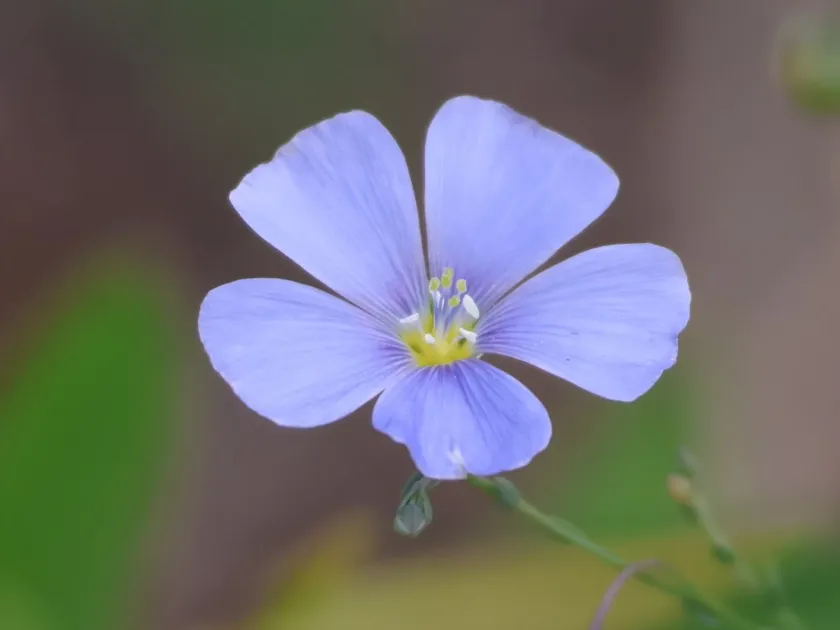
Description
Sowing dates
Perennial flax (Linum perenne L.) belongs to the Linaceae family. Sowing is typically carried out either in late autumn for winter stratification or early spring once the soil is workable.
The seeds are small and should be sown at a depth of about 1 to 2 centimeters. Ensuring even seed distribution is crucial for uniform crop stand development.
The optimal time for spring sowing is when the soil temperature consistently reaches 8-10 degrees Celsius, allowing for steady germination.
Row spacing should be maintained between 20 and 30 centimeters to ensure adequate space for root development and airflow between individual plants.
After germination, seedlings may require thinning to prevent overcrowding, which could otherwise lead to weak stalks and increased humidity around the plant base.
Growing requirements
This crop thrives in full sun exposure. It is highly intolerant of shade, which causes the stems to stretch and lose their structural integrity.
Well-drained, sandy-loam soils are ideal for perennial flax. The plant is particularly sensitive to waterlogged conditions, which can lead to root rot.
The soil pH should ideally be neutral or slightly alkaline. While the plant can tolerate low-fertility soils, moderate fertilization can enhance biomass production.
Perennial flax exhibits excellent drought tolerance once established, making it suitable for areas where frequent irrigation is not feasible or desired.
The plant is highly frost-hardy and can withstand harsh winter temperatures, remaining dormant in the soil and returning in the following growing season.
Main diseases and pests
Fusarium wilt is a common fungal threat, often triggered by excessive soil moisture and poorly drained fields that harbor the pathogen.
Flax flea beetles are significant pests that can quickly decimate young seedlings if left unmanaged during the early growth stages.
Rust diseases can occur under conditions of high humidity, leading to leaf drop and diminished photosynthetic capacity of the plant.
Aphids can occasionally infest the crop, particularly in late spring, which may require targeted insecticide treatments to prevent damage.
Crop rotation remains the most effective cultural practice to manage soil-borne diseases and maintain overall plant vigor over several seasons.