
Narbonne flax
Linum narbonense L.
Description
Growing requirements
Narbonne flax (Linum narbonense L.) is a perennial herbaceous plant belonging to the Linaceae family. Originating from the Mediterranean region, this species has evolved to thrive in warm, sunny environments with well-drained soil structures.
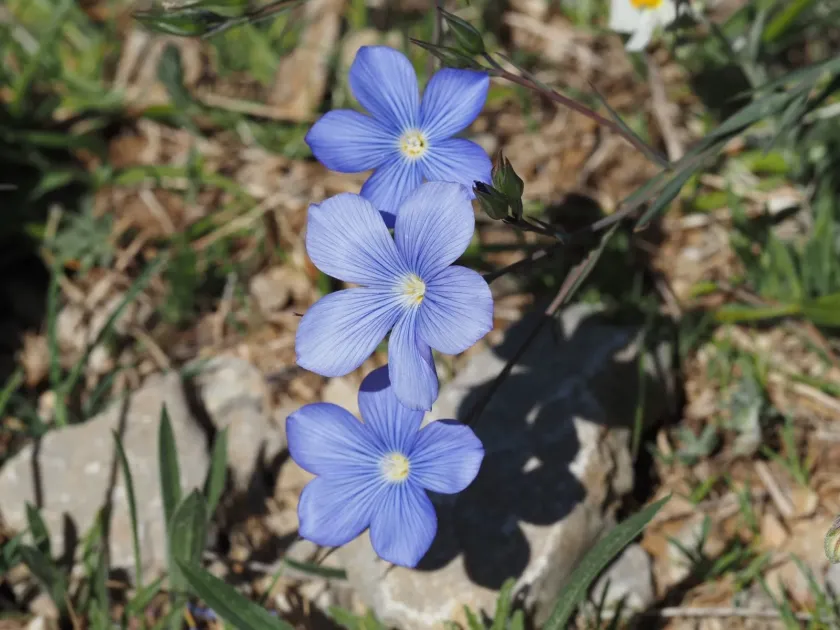
Botanically, it is characterized by slender, erect stems that grow up to 60 centimeters in height. Its foliage is sparse and linear, often exhibiting a glaucous green color that complements its striking, large, azure-blue flowers featuring a distinct white center.
The cultural requirements for this plant emphasize the need for full sun exposure. It is essential for the plant to receive several hours of direct sunlight daily to ensure strong stem development and vigorous flowering throughout the late spring and early summer months.
Soil quality is paramount; the plant demands sandy or rocky, well-drained substrates. It is highly intolerant of waterlogged conditions, which can lead to rapid root decay. Therefore, gardeners should ensure that the planting site has excellent drainage properties.
Regarding agricultural or horticultural use, Narbonne flax is strictly utilized as an ornamental plant. Its ability to create a carpet of blue makes it a highly desirable choice for rock gardens, xeriscaping projects, and borders that mimic Mediterranean landscapes.
Main diseases and pests
The primary threats to Narbonne flax are fungal pathogens often induced by high humidity or poor soil drainage. Root rots and wilt diseases are the most common issues that can compromise the health of the plant if moisture management is not strictly controlled.
In terms of pests, the plant may be susceptible to aphids that cluster on tender growth during the early season. Additionally, in specific microclimates, soil-dwelling insects might cause damage to the root system, necessitating proactive monitoring and maintaining healthy soil conditions.