
Scarlet flax
Linum grandiflorum Desf.
Description
Sowing dates
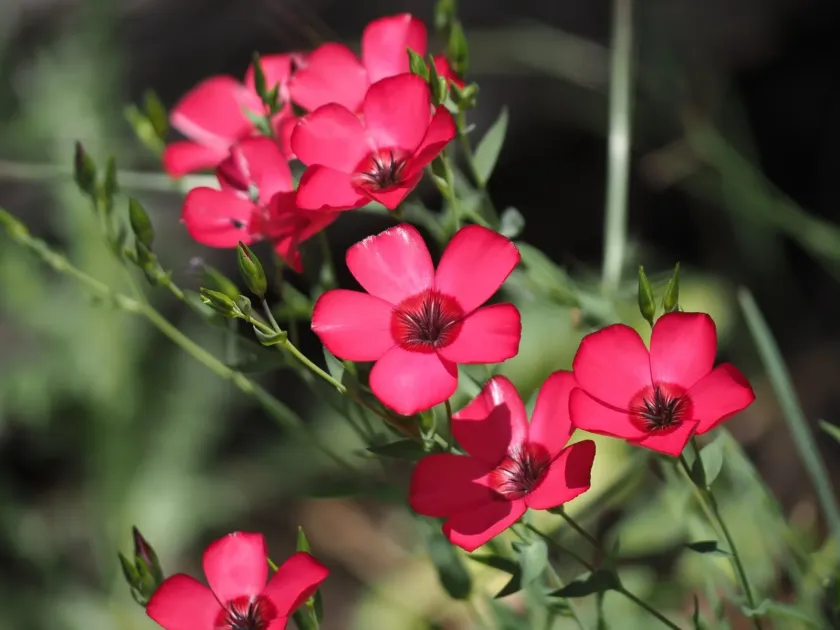
Scarlet flax (Linum grandiflorum) is an annual herbaceous plant belonging to the Linaceae family. Originating from North Africa, particularly Algeria, this species has gained global popularity as a vibrant ornamental crop.
Sowing typically takes place in early spring once soil temperatures reach 8–10 degrees Celsius. In most temperate regions, the optimal window for planting is between late April and mid-May.
Seeds should be sown directly into the prepared garden soil. Scarlet flax is sensitive to root disturbance, which makes transplanting from trays highly ineffective for large-scale or garden cultivation.
The seeds are sown at a shallow depth of 1–2 centimeters, ideally in rows spaced 15–20 centimeters apart. This spacing ensures adequate light penetration and airflow, which are critical for the plant's health.
To extend the flowering season, gardeners often employ successional sowing, planting new batches of seeds every 2–3 weeks. This practice ensures a continuous display of flowers from late spring until autumn.
Growing requirements
As a sun-loving and heat-loving plant, Scarlet flax requires full sun exposure to thrive. Shade causes the stems to become weak and leggy, significantly reducing both the quality and quantity of blooms.
The ideal soil for this crop is light, fertile, and well-drained, such as sandy loam. Improving heavy soil with organic matter or sand is necessary to prevent waterlogging, which often leads to root decay.
While the plant shows moderate drought tolerance once established, consistent moisture is vital during the germination and budding phases. Watering should be deep but infrequent to encourage a strong root system.
The optimal temperature range for the development of Scarlet flax is between 18–25 degrees Celsius. While it can tolerate minor temperature shifts, it thrives best in consistent, warm conditions throughout the season.
Proper fertilization is key to a long flowering period. A balanced application of phosphorus and potassium during the pre-budding stage helps stimulate flower production without promoting excessive vegetative growth.
Main diseases and pests
Fungal diseases are the primary threat to the crop, with Fusarium wilt and anthracnose being the most common. These diseases thrive in humid environments and can be mitigated through proper soil drainage and crop rotation.
The flax beetle is a particularly dangerous pest, capable of decimating young seedlings by consuming foliage and stems. Early monitoring is essential to prevent significant losses during the initial growth stages.
Aphids can also infest the plants, targeting tender buds and shoots. Their feeding causes stunted growth, disfigured flowers, and a general decline in the plant's health, requiring prompt treatment with insecticides.
Effective management includes the use of certified seed treatments and periodic scouting of the garden. If an infestation is detected, selective applications of systemic or contact pesticides can restore plant health.
- Fusarium wilt
- Flax beetle
- Anthracnose
- Aphids
- Flax rust