
Yellow flax
Linum flavum L.
Description
Sowing dates
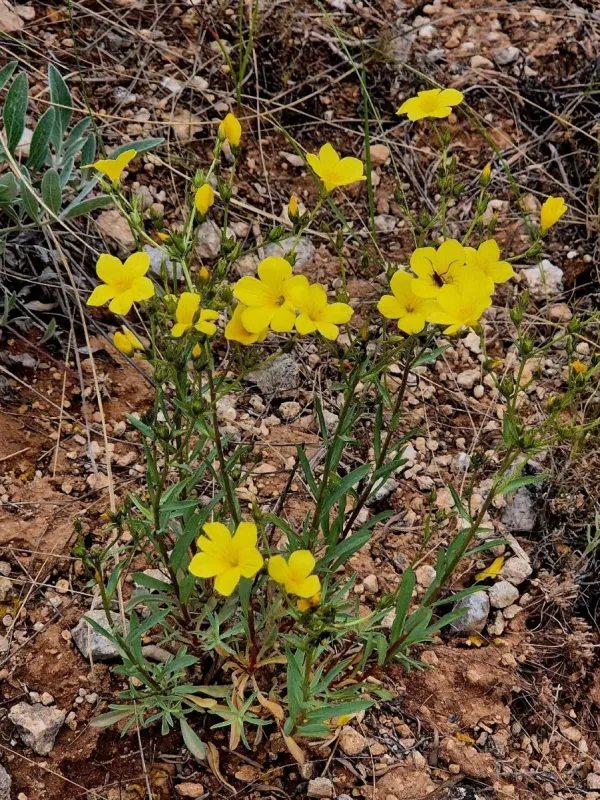
Yellow flax (Linum flavum L.) is a member of the Linaceae family. Unlike common commercial flax, this species is primarily known for its ornamental value and its vibrant yellow flowers that appear in late spring.
The plant features a sturdy stem reaching heights of 40–50 cm. It forms a dense clump of foliage, making it a popular choice for rock gardens and perennial borders in various climates.
Seeds should be sown in early spring when the soil starts to warm up. Alternatively, fall sowing is effective in cooler regions to allow the seeds to undergo natural cold stratification.
The seeds are small and should be sown at a shallow depth of approximately 1–2 cm. Proper soil contact is essential for uniform germination, so the seedbed must be finely prepared.
When sowing, ensure proper spacing of at least 20 cm between plants. This helps maintain good airflow, which is critical for reducing the risk of fungal infections later in the growing season.
Growing requirements
Yellow flax requires full sun to thrive. It should be planted in open areas where it can receive at least 6–8 hours of direct sunlight daily to encourage maximum bloom production.
The ideal soil is sandy or loamy, characterized by excellent drainage. This plant is sensitive to "wet feet" and will quickly suffer in heavy clay soils that retain excessive moisture during the winter.
Soil pH should be neutral to slightly alkaline. If the native soil is too acidic, amending it with limestone can create a more favorable environment for the root system of Linum flavum.
While the plant is hardy and drought-tolerant once established, it requires consistent moisture during the early seedling stage. Once the root system is mature, it can withstand dry spells.
Maintenance involves minimal fertilization. Over-fertilization, especially with nitrogen, can lead to leggy, weak stems that are prone to lodging during wind or rain events.
Main diseases and pests
The most common disease affecting yellow flax is root rot, typically caused by waterlogged soil conditions. Ensuring proper drainage is the most effective way to prevent this issue.
The flax flea beetle is the primary pest. These small insects can decimate young crops by feeding on the cotyledons and early true leaves, often stunting or killing the plants entirely.
Monitoring for signs of pests is essential in late spring. If populations are high, the application of organic or chemical insecticides may be necessary to protect the early growth stages.
Rust and powdery mildew can occur if plants are crowded and airflow is restricted. Keeping the planting site clean and removing debris after the growing season helps reduce the pathogen load.
Crop rotation is recommended for commercial or large-scale plantings. Avoiding the same spot for multiple years prevents the buildup of soil-borne diseases specific to flax species.
Harvesting
Harvesting yellow flax is focused on seed collection for propagation purposes. The process begins once the seed capsules have turned a dark brown color and are brittle to the touch.
The capsules are carefully harvested by hand or using small tools. It is crucial to perform this task on a dry day to prevent the absorption of moisture, which leads to seed rot.
The gathered material should be spread out in a dry, well-ventilated area for post-harvest drying. This ensures that the seeds reach a stable moisture content for long-term storage.
Once dried, the seeds are threshed from the capsules. Winnowing is then performed to remove chaff and other plant parts, resulting in clean, high-quality seed stocks.
Storage should take place in a cool, dark, and dry environment. Properly stored yellow flax seeds maintain high viability for several years, making them ideal for future planting cycles.