
Crested Hair Grass
Koeleria macrantha (Ledeb.) Schult.
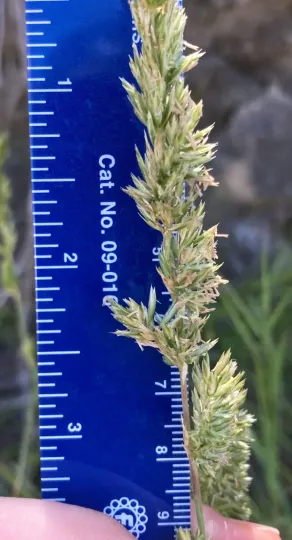
Description
Sowing dates
Crested Hair Grass (Koeleria macrantha) is a tufted perennial grass belonging to the Poaceae family. Known for its adaptation to arid and semi-arid environments, it is a key species in dry meadows and grasslands throughout the Northern Hemisphere.
The optimal time for sowing is during the early spring or late autumn. Sowing in the fall allows for natural stratification of the seeds, which typically leads to more uniform and vigorous germination in the following spring season.
The seeding rate varies depending on the purpose of the planting, such as pasture improvement or site restoration. Typically, 5 to 8 kilograms of pure live seed (PLS) per hectare are recommended to achieve a healthy and productive stand.
Given the small size of the seeds, they should be sown shallowly, ideally at a depth of 0.5 to 1.5 centimeters. Using a specialized rangeland drill or a grass seeder with depth control ensures proper seed-to-soil contact.
Establishment is often slow during the first growing season. It is crucial to maintain minimal weed pressure during this phase, as Crested Hair Grass seedlings are sensitive to competition from aggressive invasive weeds.
Growing requirements
Crested Hair Grass is exceptionally drought-tolerant and thrives in dry, well-drained soils. It is frequently found on sandy, rocky, or loamy sites, showing a strong preference for neutral to slightly alkaline soil conditions.
The plant requires full sun exposure to thrive and develop its characteristic bunching growth habit. It does not perform well in shaded or consistently wet areas, where it may be outcompeted by other more moisture-demanding vegetation.
Temperature tolerance is one of the species' greatest strengths. It is well-adapted to harsh continental climates with significant temperature fluctuations, remaining dormant throughout the coldest winter months.
In terms of soil fertility, it is not highly demanding compared to improved pasture grasses. However, modest nitrogen application can improve biomass production if the grass is being managed for intensive forage harvesting.
Natural habitats include dry prairies, dunes, and open woodlands. Its deep, fibrous root system allows it to persist even during extended dry spells, making it a reliable component of native grassland ecosystems.
Yield
While the overall biomass yield is lower than that of high-intensity cultivated grasses like Orchardgrass, Crested Hair Grass provides high-quality, protein-rich forage during the early growing season.
The forage is highly palatable to livestock, including cattle, sheep, and horses. Because it matures early, it is particularly useful for spring grazing when other pasture species have not yet fully developed their peak nutritional value.
In well-managed systems, this grass recovers reasonably well from grazing. However, it is essential to allow adequate recovery periods to prevent overgrazing, which can significantly weaken the root reserves and reduce the longevity of the bunchgrasses.
If managed for hay, harvesting should occur before the seeds reach maturity to ensure the best digestibility and nutrient profile for the animals. Late harvesting results in significantly coarser and less nutritious material.
The longevity of a Crested Hair Grass stand is significant, often lasting for many years if grazing pressure is appropriately regulated and nutrient depletion of the soil is prevented over time.
Main diseases and pests
Crested Hair Grass is naturally resistant to many common agricultural pests and diseases. However, in overly humid climates or dense stands, it may be susceptible to fungal issues like powdery mildew or rusts.
Pest pressure is usually low, though occasional outbreaks of grass-feeding insects, such as mites or specific stem-boring moths, can occur. Integrated pest management strategies, focusing on habitat diversity, usually keep these in check.
Competition from invasive species represents the greatest threat to established populations. Without periodic management, such as controlled burning or strategic grazing, invasive weeds can slowly replace native bunchgrasses.
Overgrazing is a primary management risk. Because this plant grows in distinct bunches, constant heavy pressure can leave gaps in the pasture, which are then quickly colonized by opportunistic or unwanted plant species.
Prevention of diseases and pests primarily revolves around maintaining the vigor of the plants. Proper rest intervals for pastures and avoiding heavy traffic during saturated soil conditions are key cultural practices for healthy stands.
Harvesting
For hay production, timing is critical. Harvesting should be performed during the boot to early heading stage. This provides the ideal compromise between total dry matter yield and the concentration of vital nutrients for livestock.
When harvesting seed, growers should look for the characteristic light brown color of the panicles. Given the propensity for seed shattering, combining should be timed precisely to capture the crop before significant losses occur due to wind.
For grazing management, it is advised to use rotational grazing systems. Moving livestock frequently between paddocks prevents selective grazing and ensures the Crested Hair Grass is not grazed down to the crown, which facilitates quicker regrowth.
Post-harvest care involves ensuring the field is not grazed too short before the dormant season. Retaining enough residue helps insulate the root crowns against severe winter frost and supports early green-up the following spring.
Maintaining a clean, weed-free field after harvest can be achieved through light harrowing or targeted overseeding with compatible species if the stand has become too thin over the years.