
Cicer flexuosum
Cicer flexuosum Lipsky
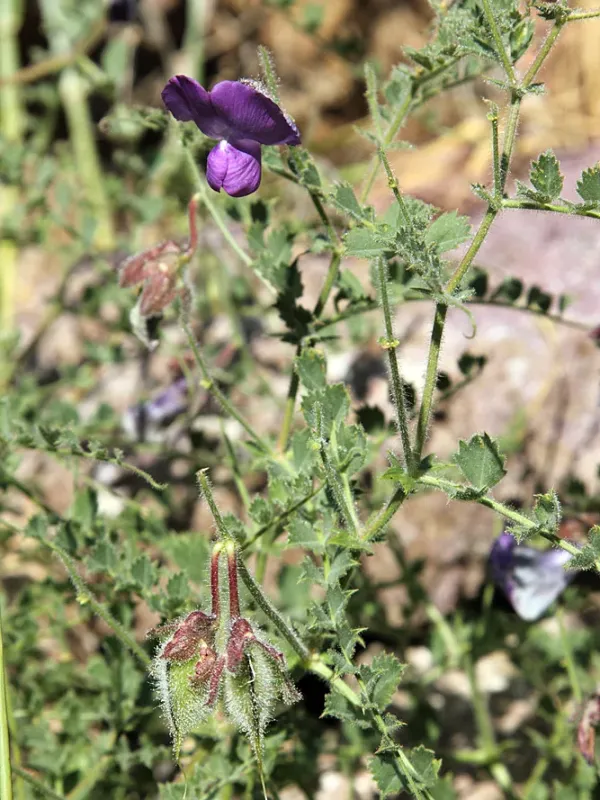
Description
Growing requirements
Cicer flexuosum, commonly known as the bent chickpea, is a perennial herbaceous species within the Fabaceae family. It is native to the rugged, high-altitude regions of Central Asia, specifically the Pamir-Alay and Tien Shan mountain ranges, where it thrives in extreme environments.
The plant is defined by its distinct, zig-zagging stem structure and resilient foliage adapted to intense UV exposure. As a high-altitude species, it demonstrates remarkable tolerance to temperature fluctuations, making it a critical genetic resource for breeding programs aiming for cold-hardy varieties.
Soil requirements for this species are specific: it necessitates excellent drainage and high mineral content, ideally in calcareous substrates. Waterlogging is the primary environmental factor that limits the distribution and survival of the species, as the root system is highly sensitive to hypoxia.
Climatic preferences include cool growing seasons with significant diurnal temperature variation. The species has evolved to maximize photosynthetic efficiency in thin mountain air, which must be considered when attempting ex-situ cultivation or research in lower-altitude greenhouses.
In addition to its ecological importance, Cicer flexuosum is a subject of interest for sustainable agriculture due to its nitrogen-fixing capabilities in nutrient-poor environments. Proper inoculation with site-specific rhizobia is essential for the healthy establishment of the crop in new areas.
Main diseases and pests
The primary pathological threats to Cicer flexuosum involve soil-borne fungi, particularly those causing vascular wilt. Because the species is a wild relative, it may have natural resistance mechanisms that are lost in domestic varieties, which are currently being studied by researchers.
Insect pests, such as weevils and aphids, present a challenge to seed production and vegetative health. In agricultural settings, these pests can be managed through crop rotation and the maintenance of biodiversity buffers around the nursery plots to support natural predator populations.
Powdery mildew is a significant risk in controlled, low-altitude environments where humidity levels may exceed the species' natural tolerance. Adequate plant spacing is mandatory to ensure cross-ventilation and prevent the establishment of fungal colonies on the foliage.
Viruses transmitted by sap-sucking insects can severely stunt plant growth and reduce seed yield. Effective management requires constant surveillance and prompt removal of infected individual plants to prevent the spread of the virus throughout the population.
Finally, vertebrate pests such as field mice and rodents can threaten the crop during winter dormancy by feeding on the thickened roots. Establishing protective netting or using ultrasonic deterrents are common strategies in specialized collection sites to preserve genetic material.