
Purple false brome
Brachypodium distachyon (L.) P. Beauv.
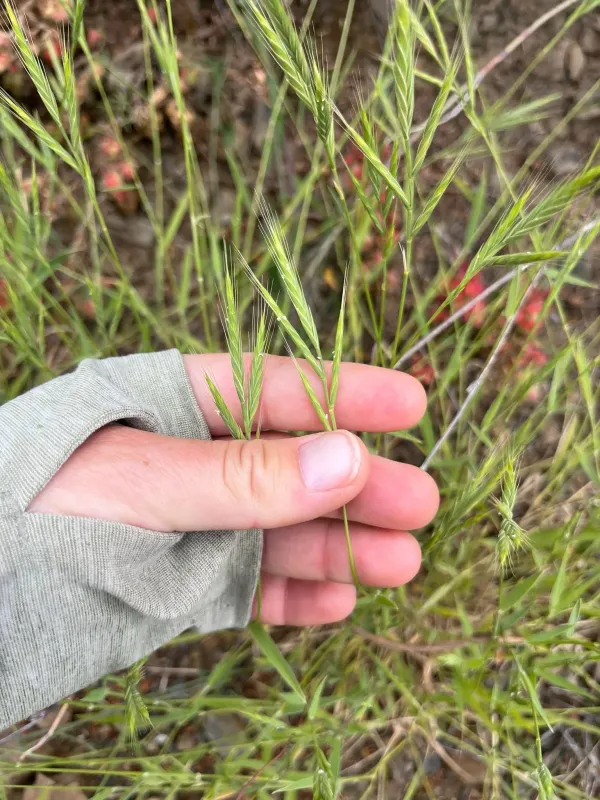
Description
Growing requirements
Purple false brome (Brachypodium distachyon) is an annual grass species in the Poaceae family, widely recognized as a fundamental model organism in plant biology and cereal research.
Native to the Mediterranean and Middle Eastern regions, this plant has evolved to thrive in diverse environments, ranging from semi-arid shrublands to open grasslands with seasonal precipitation patterns.
The plant requires well-drained, nutrient-moderate soils to achieve optimal development. It is highly valued in research for its small genome size and short generation time, allowing for rapid experimental cycles.
Botanically, it features a small stature and a limited number of seeds per spikelet, yet its physiological responses to drought and heat are highly representative of larger cereal crops like wheat.
In agricultural practice, its cultivation is primarily focused on laboratory and greenhouse settings, serving as a platform for genomic studies aimed at improving food security through crop breeding.
Main diseases and pests
Like many grasses, Brachypodium distachyon is susceptible to fungal pathogens such as powdery mildew, which can significantly inhibit growth if environmental humidity remains high.
Pests such as aphids and spider mites are known to infest the plant, causing foliage damage and potentially acting as vectors for various plant viruses during the growing season.
Root system issues, particularly rot, often occur if soil aeration is poor or if the substrate remains waterlogged for extended periods, stressing the plant's metabolic processes.
Maintaining a clean growing environment and ensuring proper plant spacing is essential to mitigate the spread of air-borne fungal spores between individual plants.
Integrated pest management strategies in controlled environments typically emphasize biological control agents and precise climate regulation to protect the crop's integrity.