
Caucasian bluestem
Bothriochloa ischaemum (L.) Keng
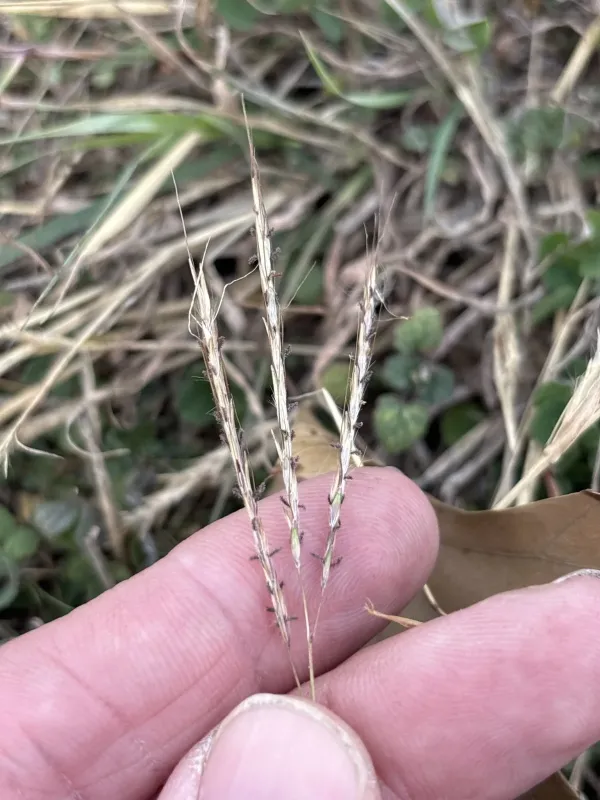
Description
Sowing dates
Caucasian bluestem (Bothriochloa ischaemum) is a perennial grass species belonging to the Poaceae family. It is widely recognized for its ability to form dense sod, making it an excellent candidate for erosion control on slopes and degraded agricultural lands.
The ideal time for planting is early spring as soon as soil temperatures reach at least 10 degrees Celsius. Fall planting is also a viable option in milder climates, allowing for better germination potential in the following spring season.
Seeds should be sown at a shallow depth of 1–2 centimeters. Ensuring proper soil-to-seed contact via light rolling is crucial for achieving high germination rates, especially in drier environments.
The establishment period for Caucasian bluestem is relatively slow, often requiring careful weed management during the first year. Once the root system is established, the grass becomes highly competitive and begins to spread efficiently.
It is commonly used to overseed pastures or to establish stands in semi-arid regions where conventional cool-season grasses fail to produce adequate biomass due to moisture limitations.
Growing requirements
The primary advantage of Caucasian bluestem is its exceptional drought tolerance. The species possesses a deep, extensive root system capable of accessing moisture deep within the soil profile during dry spells.
The grass is not demanding in terms of soil fertility. It thrives on rocky, gravelly, and low-nutrient soils, as well as on alkaline or saline soils where other standard forage crops struggle to survive.
Light exposure is critical for this species; it requires full sun to reach its peak growth potential. Shaded areas under dense tree canopies or in deep valleys are not suitable for cultivation.
While the plant can survive on minimal inputs, phosphorous and potassium fertilization during the establishment year can significantly boost vigor and winter hardiness in harsher regions.
Soil pH adaptability is another strength, as the plant performs well across a range of soil reactions from neutral to moderately alkaline. This makes it a versatile tool for land reclamation projects.
Yield
The yield of Caucasian bluestem is heavily influenced by moisture availability and seasonal heat. Under favorable conditions, the grass can support two harvest cycles per year for hay production.
Dry matter yields typically range from 1.5 to 3.0 tons per hectare, depending on soil quality and the implementation of managed irrigation or fertilization, which can further enhance output.
The forage quality is highest during the vegetative stage prior to flowering. During this period, the plant provides a good balance of protein and digestible fiber, which is highly beneficial for grazing livestock.
In grazing scenarios, it serves as a valuable forage source during mid-to-late summer when traditional pasture grasses typically enter dormancy and lose nutritional value.
For seed production, specific sections of the field should be set aside and left unharvested until the seed heads reach maturity. Harvesting must be timed correctly to ensure high seed viability.
Main diseases and pests
Caucasian bluestem is remarkably resistant to most common grass diseases. Its natural resilience minimizes the need for fungicides, making it a sustainable choice for extensive grazing systems.
Potential threats to the crop include common agricultural pests like grasshoppers or stem borers during the early growth stages. Monitoring and integrated pest management strategies are sufficient to protect the stand.
Waterlogging is a significant risk for this species. Excessive soil moisture can lead to root rot and decrease the longevity of the stand, so proper drainage is essential in low-lying areas.
- Regular inspection of the stand density.
- Avoidance of continuous overgrazing.
- Use of certified weed-free seed.
- Monitoring for invasive weed encroachment.
- Proper fertilization to maintain vigor.
Generally, the crop requires very low maintenance compared to more sensitive forage species, provided that the initial stand establishment is successful and managed according to site conditions.
Harvesting
Hay harvest should ideally take place at the early heading stage to maximize the nutritional value. Waiting too long for maximum biomass results in lignified stems, which lowers palatability for livestock.
A minimum stubble height of 5–7 centimeters must be maintained during cutting. This preserves the basal buds responsible for plant regeneration, ensuring the stand persists for many years.
Field drying is usually fast and efficient due to the arid conditions in which the plant is typically grown. Proper drying ensures the hay preserves its nutritional content without risk of mold.
Managed rotational grazing is the most efficient method for utilization. This approach prevents overgrazing and ensures that the grass has sufficient recovery time, which promotes long-term stand stability.
Stored hay should be kept in dry conditions to maintain quality. Given its robust nature, Caucasian bluestem hay is a reliable feed source throughout the winter months, offering consistent energy levels.