
Caucasian bluestem
Bothriochloa bladhii (Retz.) S. T. Blake
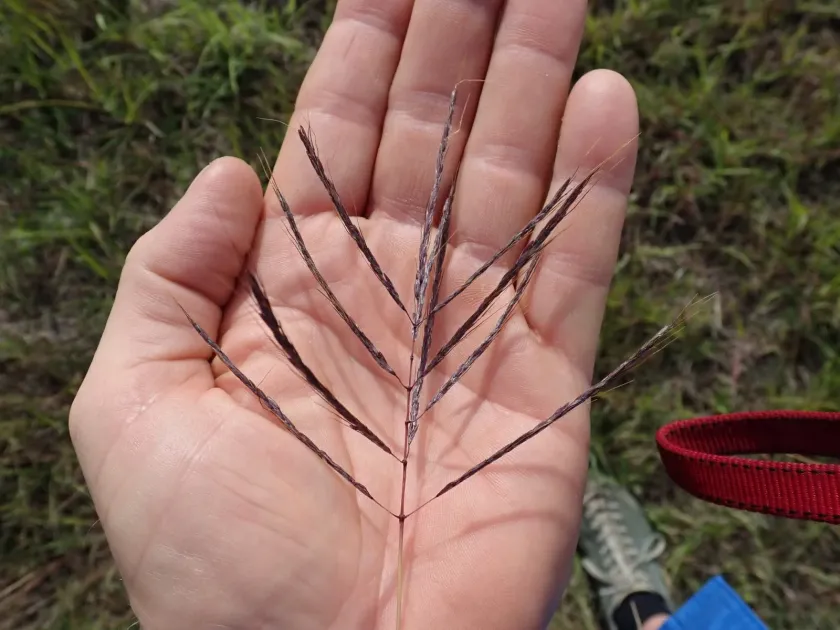
Description
Sowing dates
Caucasian bluestem is a perennial bunchgrass belonging to the Poaceae family. Propagation is typically achieved through seeds, which are sown in early spring when soil temperatures consistently reach 12-15 degrees Celsius for optimal germination.
The seedbed should be finely prepared to ensure good soil-to-seed contact. Since the seeds are small, they should be planted at a shallow depth of no more than 1-2 centimeters. Covering them too deeply often prevents the emerging seedlings from reaching the surface.
In regions with variable moisture, irrigation after sowing is highly recommended to establish the seedlings. Once established, the root system develops rapidly, allowing the plants to become self-sufficient even in challenging environmental conditions.
Seeding rates depend on the purity and germination percentage of the seed lot. For forage purposes, row planting with spacing of about 20-30 centimeters is standard, allowing sufficient space for individual plant development and tillering.
Weed control during the first season is essential as the grass has a slow initial growth phase. Once the plant has developed a strong root system, it becomes very competitive and can effectively suppress most surrounding weeds.
Growing requirements
This grass is highly valued for its ecological adaptability. It thrives in various soil types, ranging from sandy loams to heavy clays, provided there is adequate drainage to prevent waterlogging, which the plant does not tolerate well.
Caucasian bluestem is recognized for its significant drought tolerance. Its deep root system allows it to reach moisture in subsoil layers, making it a reliable forage source even in regions experiencing long dry spells during the summer.
The plant is highly responsive to full sunlight exposure. It does not perform well in shaded areas, where growth becomes sparse and the nutritional quality of the forage significantly declines compared to plants grown in full sun.
While it can survive on lower fertility soils, nitrogen fertilization significantly boosts biomass production. A balanced fertilizer program applied during the active growth period can increase both the yield and the protein content of the forage.
The plant has moderate temperature requirements but is highly heat-tolerant. It remains dormant during the cold winter months and begins rapid growth as soon as spring temperatures rise, making it a great seasonal performer.
Yield
The forage yield of Caucasian bluestem is quite substantial under proper management. When maintained under a rotation system, it provides high-quality grazing or multiple cuts of hay throughout the growing season.
For best results, forage should be harvested or grazed at the vegetative stage or early boot stage. Waiting until the plant reaches full maturity leads to lignification of the stems, which drastically reduces palatability and nutritional value for livestock.
Yield is influenced by the density of the stand and the frequency of harvests. With a well-established stand, the grass can produce multiple cuttings per year, provided there is adequate recovery time between harvests to allow for root energy replenishment.
The plant is particularly favored for its resilience against trampling by livestock, making it ideal for permanent pasture usage. The dense sod formation prevents soil erosion and maintains field integrity even under high stocking rates.
Data suggests that productivity peaks in the second and third years after establishment. During this time, the root system is fully developed, and the plants show maximum resistance to environmental stressors and grazing pressure.
Main diseases and pests
Caucasian bluestem is naturally resistant to many common grass diseases. However, high-humidity environments can sometimes lead to leaf spot or rust infections, which are more prevalent in dense, poorly ventilated stands.
While it is relatively free from major pests, local outbreaks of aphids or grasshoppers may occur. These are usually manageable through standard monitoring and, if necessary, the application of appropriate biological or chemical controls.
Effective management is the best defense against threats. Ensuring proper spacing between rows to improve air circulation can significantly reduce the risk of fungal pathogens taking hold during damp weather conditions.
Field sanitation is also a key practice. Removing heavy plant residues after the final harvest of the year can help prevent the carry-over of pathogens into the following spring and reduce the habitat for overwintering pests.
Regular monitoring of the pasture for signs of damage or abnormal yellowing is recommended. Early detection allows for targeted interventions that are far more effective than attempting to manage large-scale infestations later in the season.
Harvesting
Timing the harvest is critical for maximizing forage quality. For hay production, cutting should occur before the seed heads emerge, as this ensures the highest concentration of protein and minerals within the leaf tissue.
Mechanical harvesting should be performed with a height setting of about 5-10 centimeters. Cutting too close to the ground can damage the plant's crown, which slows down the recovery process and reduces the regrowth speed of the next cutting.
After cutting, the grass should be allowed to dry in the field. Due to its stem characteristics, Caucasian bluestem typically dries well under good weather conditions, facilitating the baling process with minimal nutrient leaching.
For seed production, harvesting takes place when the panicles show maturity and begin to change color. This process requires precise timing to prevent the seeds from shattering and falling to the ground before they can be collected.
Post-harvest management often includes cleaning the field of remaining stubble to prevent accumulation of dead material. This practice ensures that the subsequent flush of growth receives adequate light and nutrients from the soil.