
Barley Mitchell grass
Astrebla pectinata (Lindl.) F. Muell.
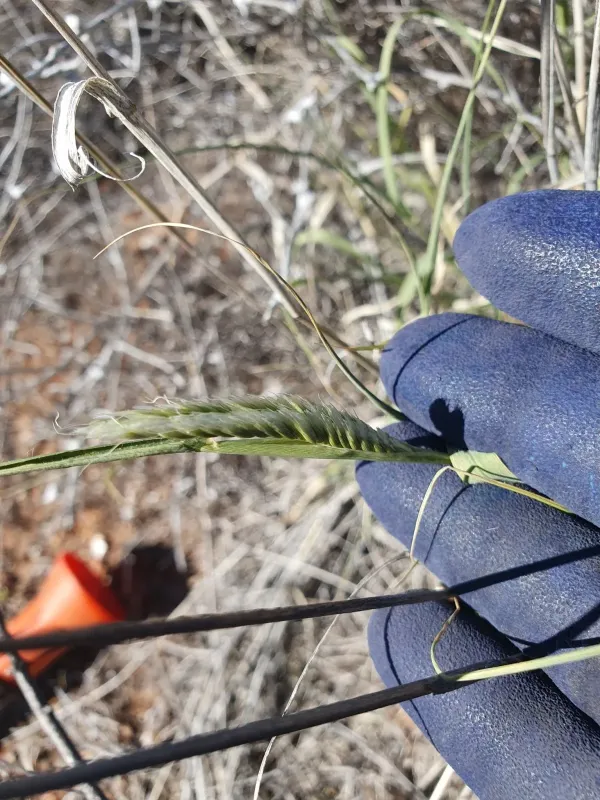
Description
Growing requirements
Barley Mitchell grass (Astrebla pectinata) is a perennial grass species belonging to the Poaceae family. It is widely recognized as one of the most important forage species in the arid and semi-arid regions of inland Australia, providing essential nutrition for livestock.
The species is highly adapted to heavy clay soils, often referred to as "Mitchell grass downs." These soils have a high water-holding capacity, which is crucial for the survival of the plant during extended intervals between rainfall events in the Australian outback.
Morphologically, Barley Mitchell grass forms dense, tussock-like clumps that can reach nearly a meter in height. Its leaves are stiff and glabrous, while the inflorescences are characterized by distinct, pectinate (comb-like) spikes that are highly diagnostic for the species.
The plant requires full sun and high heat to thrive. It enters a state of dormancy during cool weather and remains productive even under extreme temperature fluctuations, provided the root system is not subjected to prolonged waterlogging, which the plant cannot tolerate.
From an agricultural standpoint, it is a primary grazing resource. It is highly valued for its persistence and its ability to remain palatable and nutritious for cattle and sheep even when the foliage has matured and dried out, making it an excellent drought reserve.
Main diseases and pests
Overgrazing is the most significant threat to the long-term sustainability of Mitchell grass pastures. Continuous heavy grazing reduces the plant's vigor and allows less desirable or invasive species to dominate, which can lead to permanent degradation of the grazing land.
While the plant is generally robust, it can be susceptible to fungal pathogens if exposed to unusual periods of high humidity and stagnant water. Furthermore, grasshoppers and locusts are the most common insect pests that can cause localized defoliation in high-density patches.