
Brown bent
Agrostis vinealis Schreb.
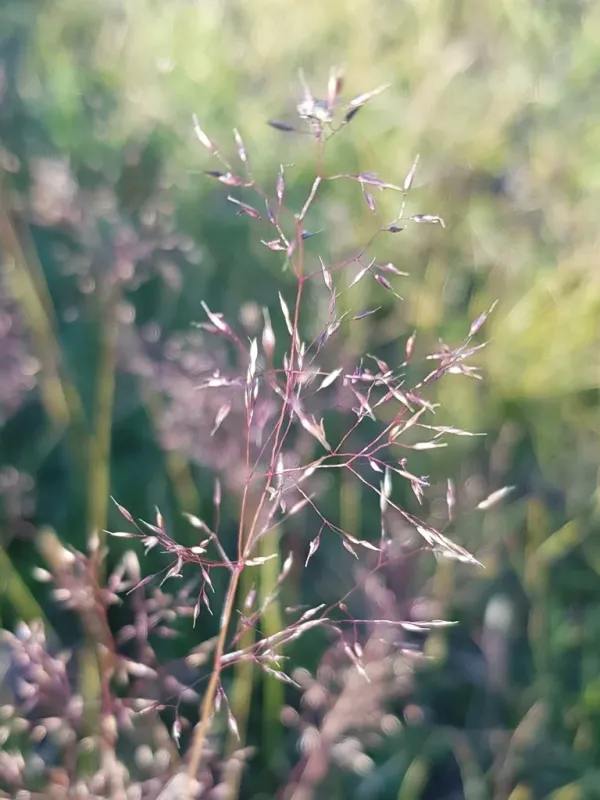
Description
Sowing dates
Brown bent (Agrostis vinealis Schreb.) is a perennial grass species belonging to the Poaceae family. Sowing is typically carried out in the spring months when soil temperatures reach the threshold required for successful germination.
The ideal planting window is usually between late April and early May. In regions with milder climates, late autumn seeding is also possible, allowing the seeds to germinate early the following spring as soon as conditions improve.
The recommended seeding rate is generally 8 to 12 kilograms per hectare, depending on the seed quality and soil preparation. Proper drilling depth, typically between 0.5 and 1 centimeter, ensures optimal germination success.
Since the species establishes itself slowly during the first year, it is vital to keep the field free of aggressive weeds. This allows the grass to develop a robust root system and form a dense, uniform sward.
Rolling the soil after seeding is highly recommended to improve contact between the soil particles and the small seeds, which significantly increases the overall emergence rate across the plot.
Growing requirements
Agrostis vinealis is highly valued for its ability to thrive on nutrient-poor, sandy, or light soils where more demanding crops fail. It shows excellent adaptation to acidic environments, making it a reliable choice for marginal lands.
This grass is notably drought-tolerant, capable of surviving periods of water scarcity that would be detrimental to other pasture species. It is also winter-hardy and easily withstands harsh freezing temperatures.
While the species prefers sunny, open locations to achieve maximum productivity, it demonstrates moderate tolerance to shading. However, its density and biomass production are consistently higher in full sunlight.
Nitrogen fertilization in the early spring can significantly boost vegetative growth. Additionally, phosphorous and potassium applications during the initial establishment phase contribute to deeper root development.
The species exhibits strong resistance to trampling, making it suitable for grazing systems. It recovers quickly from moderate mechanical damage and maintains its structure under regular livestock usage.
Yield
Brown bent is primarily used for creating sustainable pastures and hay meadows on light or eroded soils. It provides highly palatable forage that is well-consumed by cattle, sheep, and horses.
Yields are highly dependent on soil management and consistent moisture levels. In well-maintained areas, it can produce one to two high-quality cuts per growing season, providing a stable source of feed.
Integrating this species into grazing mixtures helps stabilize the soil surface. Its underground stolons help bind the soil particles together, acting as an effective tool for erosion control on slopes.
Nutritional value remains optimal if the grass is harvested before the full flowering phase. Once the plant enters the reproductive stage, fiber content increases, so timely mowing is essential to keep protein levels high.
Being a perennial crop, it offers longevity and cost-efficiency for farmers, as it does not require frequent reseeding, maintaining productivity over many years if managed correctly.
Main diseases and pests
The plant can be susceptible to fungal diseases, such as rust and powdery mildew, particularly in conditions with poor airflow and high humidity. Proper grazing management helps mitigate these risks.
Pests such as cereal aphids and meadow bugs may occasionally infest the sward. They cause stress to the plant by feeding on its sap, which can lead to localized yellowing and stunted growth.
The most effective strategy against pests and diseases is maintaining a healthy, vigorous stand through proper nutrient management. Stressed plants are always more prone to damage than healthy ones.
Cultural control methods, such as removing old plant residue and maintaining appropriate harvest intervals, are highly recommended to prevent the buildup of pathogens in the field.
Chemical intervention is rarely necessary in pasture settings and should be avoided to protect biodiversity. Integrated pest management practices remain the gold standard for long-term health of the pasture.