
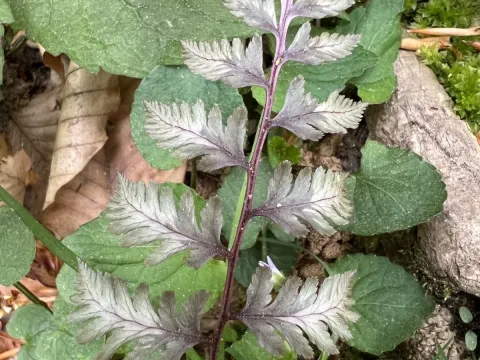
Anisocampium
Anisocampium
Anisocampium is a genus of ferns belonging to the Athyriaceae family. These perennials are known for their delicate fronds and specific environmental requirements, often making them a sophisticated choice for gardens or specialized collections.
What the section contains

Anisocampium
The native range of these ferns primarily includes regions across Asia. In cultivation, they thrive best in environments that mirror their natural woodland habitats, emphasizing the importance of filtered light and protection from harsh weather conditions.
The ideal soil for Anisocampium is nutrient-rich, humus-based, and highly porous to ensure excellent drainage. While the soil needs to be kept moist, it should never be waterlogged, as stagnant water can severely damage the plant's delicate root structures.
Climate requirements for this culture revolve around consistency. They prefer temperate conditions with stable humidity levels. Extremes in temperature or prolonged periods of drought can cause the fronds to wilt or become brittle, detracting from their ornamental value.
Shade management is crucial for the successful growth of Anisocampium. Direct sunlight can scorch the fronds quickly, leading to necrotic spots. A site with dappled shade or protection from northern exposure is generally the most recommended location for planting.
Fungal pathogens represent a primary concern for the health of Anisocampium, especially in glasshouses or gardens with poor air circulation. Over-saturation of leaves during watering should be avoided to prevent blight or spot diseases.
Gastropods, including slugs and snails, are frequent pests that feed on the tender, emerging fronds during the early growth phase. Gardeners are advised to monitor these areas closely during wet weather when these pests are most active.
Spider mites are another common threat, particularly in environments where humidity is not properly maintained. These pests thrive in dry conditions and can cause the foliage to lose its vigor and turn yellow if not treated promptly.
Root rot is often the result of improper soil composition or excessive irrigation. Once the root system is compromised by fungal or bacterial rot, the plant struggles to transport nutrients, often leading to rapid decline.
To keep the plants robust, avoid planting them too densely. Proper spacing ensures that fresh air can move through the foliage, significantly reducing the risk of pest infestations and fungal spread across the garden bed.