
Japanese painted fern
Anisocampium niponicum
Description
Growing requirements
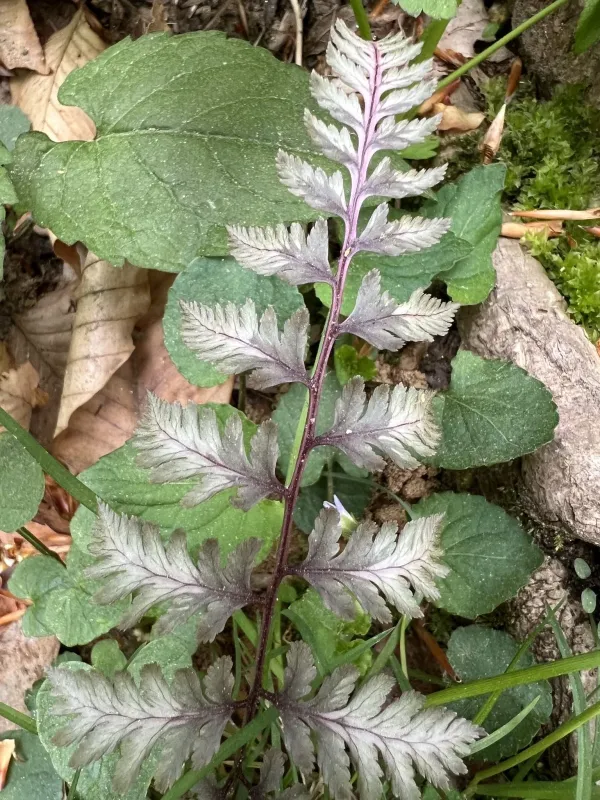
The Japanese painted fern (Anisocampium niponicum) is a decorative perennial fern belonging to the Athyriaceae family. Known for its distinctively colorful, silvery-metallic fronds, this plant is widely cultivated for its ornamental appeal in woodland gardens and shaded landscape areas.
Native to East Asia, including Japan, China, and Korea, the species thrives in humid forest habitats. Its global use has expanded significantly in temperate regions, where gardeners utilize its hardiness and aesthetic qualities to create lush, multi-textured shade garden displays.
Cultivation requires specific environmental conditions, primarily protection from direct sunlight, which can fade the colors and scorch the fronds. A location that receives dappled shade or full shade throughout the day is ideal for maintaining the plant's structural integrity and foliage patterns.
The soil should be rich in organic matter, moist, and well-drained. Incorporating compost or leaf mold into the planting hole helps mimic the natural forest floor environment, ensuring the rhizomes receive adequate nutrients while maintaining the slight acidity preferred by this species.
Management involves consistent moisture control, as the plant does not tolerate prolonged drought. Applying organic mulch is highly recommended to regulate soil temperature and moisture levels, which supports vigorous growth and deepens the silver coloration typical of mature fronds.
Main diseases and pests
Slugs and snails are the primary pests that target the soft, emerging fronds in spring. Integrated pest management strategies, such as creating physical barriers around the base of the plant or employing manual removal methods, are usually effective in controlling these populations.
Fungal issues, such as leaf spot, can occur if the foliage remains wet for extended periods in environments with poor air circulation. Proper spacing between plants is essential to promote airflow and decrease the humidity around the foliage, significantly reducing the likelihood of disease development.