
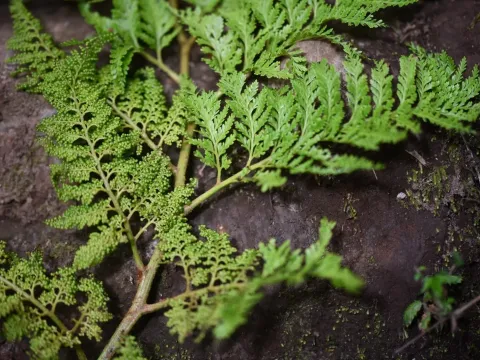
Thyrsopteris
Thyrsopteris
Thyrsopteris (Thyrsopteris elegans) is a rare species of tree fern belonging to the monotypic family Thyrsopteridaceae. It is primarily cultivated as a botanical curiosity in specialized greenhouse collections.
What the section contains

Thyrsopteris
Originating from the Juan Fernández Islands in Chile, this species is adapted to maritime, cool, and highly humid forest environments, which makes its cultivation demanding in non-native settings.
The substrate for Thyrsopteris must be highly porous, consisting of organic matter such as peat, perlite, and coarse bark, ensuring excellent drainage while maintaining constant moisture.
The plant requires filtered light, as direct intensity can damage its fronds. Maintaining an ambient temperature between 15°C and 22°C and high atmospheric humidity is crucial for healthy development.
Agricultural management is focused on mimicking forest floor conditions, involving consistent watering and protection from cold drafts or excessive heat spikes.
The most common threats to Thyrsopteris in cultivation are fungal pathogens, specifically those causing root rot, which are triggered by waterlogged conditions and poor air movement.
Pests such as spider mites and scale insects represent a significant danger, especially when indoor humidity levels drop below optimal thresholds.
Management of these pests involves careful monitoring and the application of gentle systemic pesticides to avoid harming the delicate fern fronds.
Proper sanitation in greenhouse environments is essential to prevent the spread of spores and insects between sensitive specimens.
Early identification of signs of stress, such as yellowing fronds or wilting, is vital for implementing timely intervention and corrective care.