
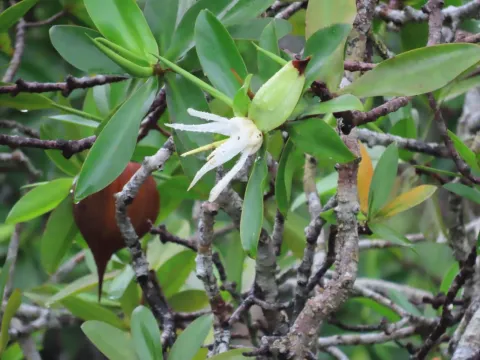
Pelliciera
Pelliciera
Pelliciera is a genus of mangrove trees representing the monotypic family Pellicieraceae. These trees are highly specialized, thriving in the intertidal zones of tropical coastal regions, primarily in Central and South America.
What the section contains

Pelliciera
The plant requires muddy, water-saturated substrates rich in organic matter. It possesses unique biological adaptations that allow it to filter salt from the seawater, enabling it to survive in high-salinity environments where most other plants would perish.
Optimal growth depends on a consistently warm tropical climate. Pelliciera requires high humidity and periodic tidal flooding, which are essential for nutrient exchange and maintaining the health of its root system.
The soil conditions must support anaerobic processes, as the plant has developed specialized root structures to obtain oxygen in waterlogged environments. It is a slow-growing tree that emphasizes durability over rapid biomass production.
Pelliciera serves as a critical component of coastal ecosystems. Its extensive root architecture helps stabilize sediments, prevents coastal erosion, and provides essential habitats for various marine organisms, crustaceans, and fish species.
The primary threat to the stability of Pelliciera populations is the conversion of coastal mangrove forests into shrimp farms and infrastructure development. Human encroachment leads to the loss of vital nursery habitats.
Rising sea levels driven by climate change pose a significant risk to these mangroves. If the sea level rises too quickly for the trees to adapt, they may become submerged beyond their threshold for oxygen intake.
Pests such as wood-boring marine mollusks and various crab species can cause physical damage to the trunk and roots. These openings often become entry points for secondary bacterial and fungal infections.
Environmental pollution, specifically the discharge of industrial chemicals and oil spills, negatively impacts the health of these trees. Such toxins disrupt the delicate salt-filtering mechanisms within the leaves.
Fungal diseases are a constant threat in disturbed ecosystems. Lack of water flow or contaminated stagnant water can significantly reduce the tree's resilience, making it susceptible to widespread die-offs.