
Japanese plum
Prunus salicina x P. americana
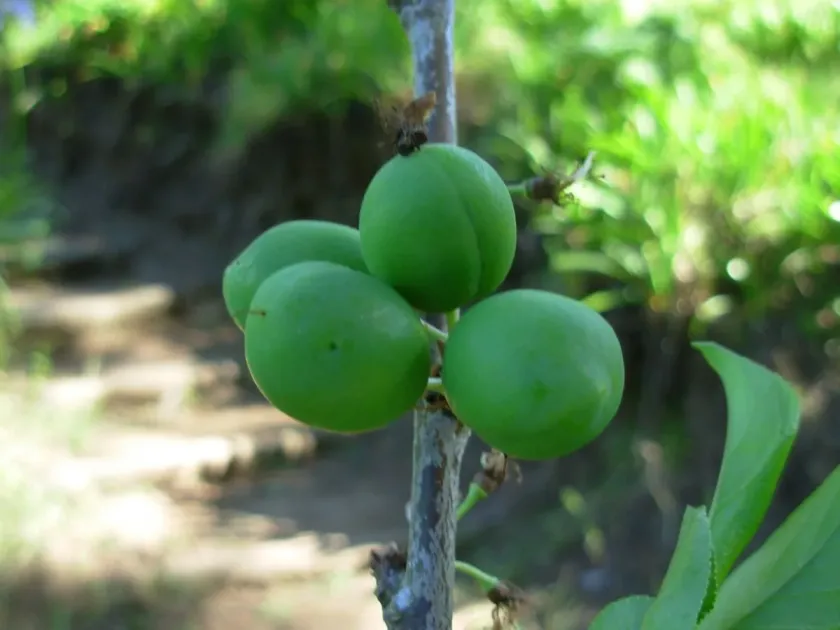
Description
Growing requirements
The Japanese plum, derived from interspecific hybridization involving Prunus salicina and Prunus americana, belongs to the Rosaceae family. These trees are characterized by vigorous growth, an upright or spreading habit, and rapid development of fruit-bearing branches. The tree typically requires consistent training and pruning to maintain a productive structure and ensure sunlight penetration to the center of the canopy.
Cultivation requires well-drained, fertile soil with a neutral pH, ranging from 6.0 to 7.0. While the species is noted for its hardiness, it is particularly sensitive to late spring frosts due to its early flowering period. Selecting a site with good air circulation and full sun exposure is essential to mitigate frost risks and promote healthy fruit development.
Agronomic management involves a strict irrigation schedule, particularly during the fruit enlargement phase. Nutrient management is equally important; nitrogen applications in early spring promote vegetative growth, whereas potassium and phosphorus applications later in the season are crucial for fruit quality and winter hardening. Mulching around the root zone helps maintain soil moisture levels.
In terms of economic use, these plums are highly valued for their dessert quality, juiciness, and long shelf life compared to traditional European plums. Most commercial cultivars are cross-pollinating, necessitating the planting of compatible varieties within the same orchard to ensure optimal fruit set. The rootstocks derived from this lineage are also widely used due to their excellent graft compatibility.
Consistent canopy maintenance, including annual thinning and removal of diseased wood, is vital to prevent overcrowding and improve airflow. This practice minimizes the humidity within the foliage, which is a major factor in reducing disease incidence. During high-yield years, fruit thinning is recommended to increase individual fruit size and prevent limb breakage.
Main diseases and pests
The primary threats to Japanese plum orchards include fungal diseases such as brown rot (Monilinia) and shot-hole fungus (Stigmina carpophila). These pathogens thrive in warm, wet conditions and can cause significant damage to flowers, twigs, and maturing fruit. Implementing an effective spray program using appropriate fungicides is essential during the pre-bloom and post-bloom stages.
Pest management is focused on controlling the plum curculio, aphids, and oriental fruit moths. These pests can severely impact both tree vigor and fruit marketability. Integrated Pest Management (IPM) strategies, including the use of pheromone traps, timely monitoring, and targeted insecticide applications, are standard in commercial orchards to minimize economic losses.
Harvesting
Harvesting is performed in multiple passes as fruit ripens unevenly. To maintain the highest quality, fruit should be picked by hand when it reaches the desired stage of color development. Avoiding bruising during harvest is critical, as damage to the delicate skin of the fruit leads to rapid post-harvest decay.
Once harvested, fruit should be cooled immediately to lower the respiration rate and extend shelf life. Proper storage involves maintaining cool temperatures and appropriate humidity levels in packing houses. This ensures that the Japanese plums retain their crisp texture and characteristic flavor profile until they reach the consumer.