
Mahaleb cherry
Prunus mahaleb L.
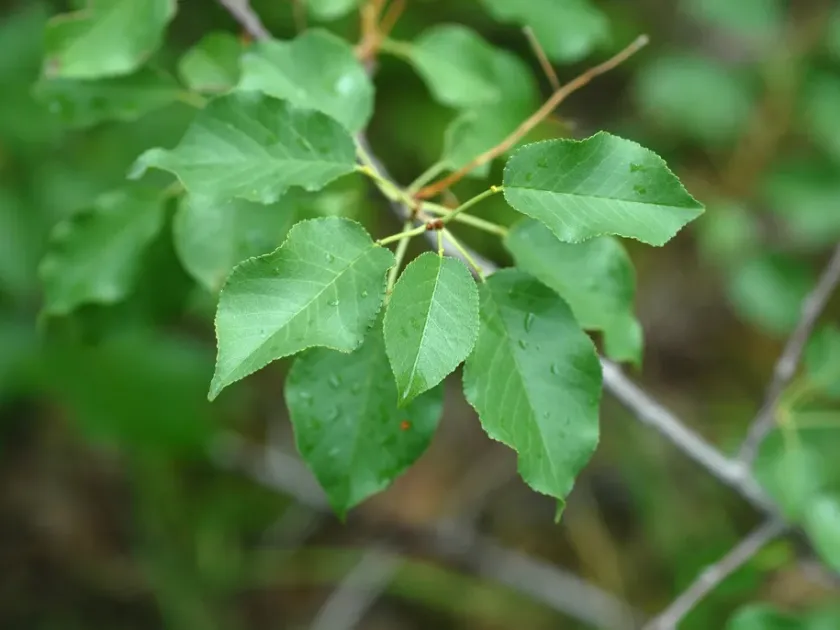
Description
Sowing dates
Propagation of Mahaleb cherry from seeds is primarily carried out in the autumn, allowing the seeds to undergo natural stratification in the soil. For spring sowing, seeds require mandatory pre-stratification for 60–90 days at low positive temperatures.
The optimal planting depth for seeds is 3–5 cm, depending on the type and density of the soil substrate. In nurseries, sowing is performed in rows with inter-row spacing of up to 60–90 cm to allow for mechanized maintenance and subsequent budding.
Seedlings emerge uniformly and are characterized by high growth energy, which allows for the production of high-quality one-year-old rootstock by autumn under favorable conditions. It is essential to ensure optimal soil moisture during germination to prevent the upper layer from drying out.
For breeding and propagation purposes, the green cutting method is also used, which requires the application of growth regulators and the creation of artificial fog conditions. However, the seed method remains the primary choice due to its simplicity and the high viability of the seed progeny.
Transplanting young plants to their permanent site or a nursery bed for rootstock development is conducted in early spring before active sap flow begins. The culture is known for its high survival rate in new areas when proper agronomic practices are followed.
Growing requirements
Mahaleb cherry belongs to the Rosaceae family and is a drought-tolerant crop, perfectly adapted to stony and calcareous soils. It does not tolerate prolonged waterlogging or high water tables, preferring well-aerated soil compositions.
The plant is undemanding regarding climatic conditions, showing high winter hardiness in temperate regions. It develops successfully on slopes where other fruit crops might suffer from water deficiency or poor soil quality.
Light exposure is a critical factor for the normal development of Mahaleb cherry, so open, sunny locations are chosen for planting. Shading leads to shoot stretching, a decrease in the plant's overall immunity, and a reduction in wood quality when used as a rootstock.
Soil acidity is significant for the full development of the root system; however, Mahaleb cherry tolerates high lime content better than other Prunus species. In soils with a high pH, it maintains high productivity and resistance to chlorosis.
Agronomic management includes regular weeding of rows, soil aeration, and moderate watering during the first years of seedling life. Mature trees generally require no irrigation except during extremely dry periods, as they possess a deep and powerful root system.
Yield
In commercial fruit growing, Mahaleb cherry is not cultivated for fruit production, as its berries are small, astringent, and of low culinary quality. However, it is an indispensable rootstock for cherries, ensuring high yields of grafted varieties.
The use of Mahaleb cherry as a rootstock significantly accelerates the entry of fruit trees into the productive phase. Varieties grafted onto it often begin to bear fruit as early as 3–4 years after planting, demonstrating high precocity.
Yields of crops grafted onto Mahaleb are stable, although the trees may be slightly less long-lived compared to those on wild cherry rootstocks. Furthermore, Mahaleb promotes more intensive canopy development and an even distribution of fruit load.
For nursery operations, the output of standard seedlings per hectare of seed sowing is a key efficiency indicator. With proper agronomic practice, the output can reach 50,000–70,000 high-quality rootstocks per hectare.
Harvesting seeds (pits) for nursery needs is performed when the fruits are fully ripe and have turned black. The pits are cleaned of pulp, washed, and dried for storage or stratification.
Main diseases and pests
Mahaleb cherry has natural immunity to many fungal diseases, but if agronomic practices are neglected, it can be susceptible to cherry leaf spot (Coccomyces hiemalis). This disease manifests as premature leaf drop and requires the application of copper-based fungicides.
Aphids are the most common pests that damage young shoots and leaves during the spring-summer period. Systemic insecticides are used for control, especially when Mahaleb is used as a rootstock in intensive orchards.
Monilinia brown rot also poses a threat, especially in years with a wet and cool spring, causing the drying of flowers and young branches. Prevention includes sanitary pruning of infected parts and timely fungicide treatment.
During the winter, young plants can suffer from bark damage by rodents, necessitating trunk protection using mesh or special materials. Rodent damage is a common cause of seedling loss in nurseries.
- Cherry leaf spot
- Aphids
- Monilinia brown rot
- Rodents
Harvesting
Harvesting fruits for seed extraction is performed in late July or August when the berries are fully black and shiny. Harvesting is done by hand to ensure the seeds have high germination rates.
After collection, the fruits must be processed immediately to avoid pulp fermentation, which negatively affects seed quality. Specialized pulping machines or manual methods are used, followed by washing in running water.
Cleaned pits are dried in the shade with good ventilation, avoiding direct sunlight. Over-drying the seeds is undesirable, as it can lead to a decrease in germination capacity for the next season.
Storage of seeds before sowing or stratification is carried out in a cool, dry place in paper or cloth bags. Optimal indoor humidity helps maintain embryo viability for up to one year before sowing.
Using modern cleaning methods allows for a significant increase in seed purity and the removal of plant debris, which could otherwise become a source of infection in the nursery rows.