
American plum
Prunus americana Marsh.
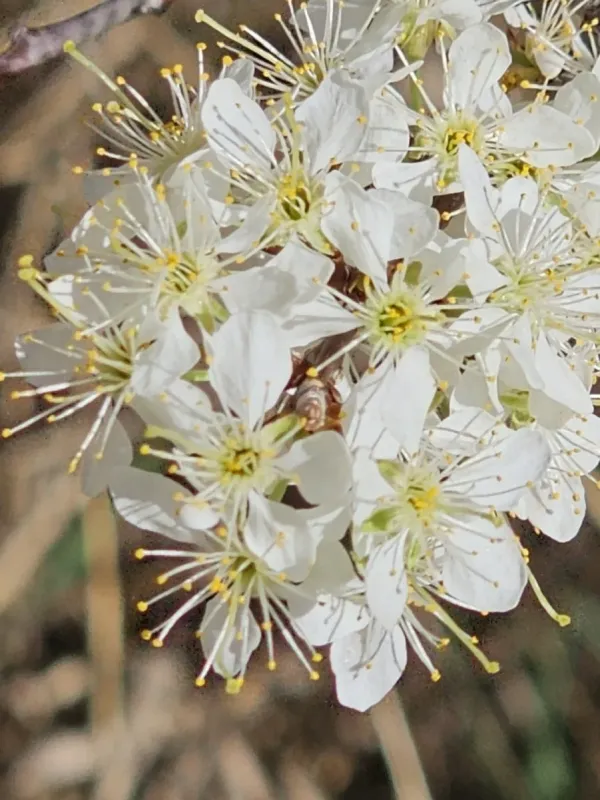
Description
Sowing dates
The propagation of the American plum is most commonly achieved through seeds, as seedlings generally retain the characteristics of the parent species. Sowing of stratified seeds is performed in autumn for overwintering in prepared beds or in spring after extensive pre-treatment at temperatures between 0 and +5 degrees Celsius.
To accelerate germination, seeds are soaked in water and stratified for 90 to 120 days in a moist substrate, such as sand or peat. Monitoring moisture levels is essential to prevent seeds from drying out or rotting before they are transplanted into the soil.
Vegetative propagation involves grafting scions onto other plum or rootstock species. Budding is typically performed during the summer when the bark separates easily, ensuring effective contact between the cambium layers of the rootstock and the scion.
Young saplings require consistent watering and protection from weeds during their first years, as their root systems are not yet developed enough to effectively extract water from deeper soil layers. Transplanting to a permanent location is best scheduled for early spring, just before bud break.
When establishing an orchard, the spacing between trees should be at least 4 to 5 meters, taking into account the species' tendency to develop a broad, spreading crown and root suckers, which can increase planting density over time.
Growing requirements
The American plum is an extremely resilient and cold-hardy species, capable of withstanding the harsh winters characteristic of the northern regions of its natural habitat. It grows successfully across various climatic zones, adapting well to temperature fluctuations.
The plant prefers well-drained loamy or sandy soil with a neutral or slightly acidic pH. It does not tolerate waterlogging in the root zone, therefore, when planting in heavy soils, proper drainage systems must be installed.
For optimal development and the setting of flower buds, the tree requires abundant sunlight. Shaded conditions lead to a sparse crown and significantly reduced productivity, so planting sites should be chosen in open, well-ventilated areas.
The species is notably drought-tolerant, although it requires moderate watering during the active fruit growth phase. Consistent soil moisture during dry summer months positively impacts both the size and quality of the harvest.
In its natural environment, the plant grows along riverbanks, forest edges, and on open prairies of North America. This trait should be considered by providing protection from strong prevailing winds when cultivating the trees in open fields.
Yield
The fruits of the American plum ripen toward the end of summer or early autumn. The yield from a mature tree can be quite high, providing growers with large quantities of small, round, bright red or yellow fruits.
The fruits often have a distinct tart flavor when eaten fresh, which limits their use as a dessert fruit. However, due to their high pectin and acid content, they are ideal for making jams, jellies, sauces, and preserves.
Regular crown pruning stimulates the formation of new fruiting branches and facilitates the harvesting process. Without proper shaping, the crown becomes overly dense, leading to smaller fruit size and restricting light penetration to the inner parts of the tree.
Fruiting typically begins 3 to 5 years after planting seedlings, with productivity increasing gradually over time. The tree is capable of maintaining high yields for several decades provided it receives proper maintenance and protection from pests.
The species is also frequently used as rootstock for cultivated plum varieties due to its vigorous root system and excellent compatibility with a wide range of other stone fruit crops.
Main diseases and pests
One of the significant biological threats to this culture is plum pocket, a fungal disease that deforms the fruit and renders them unsuitable for consumption. Prevention involves sanitary pruning and the removal of infected fruit from the site.
The tree may also be susceptible to shot-hole fungus, which manifests as dark spots on the foliage. To combat fungal infections, copper-based treatments are applied during the plant's dormant season.
Among pests, the plum curculio and aphids can cause the most damage. Curculio larvae damage the fruit pulp, leading to premature fruit drop, while aphids suck sap from young leaves, stunting the growth of new shoots.
An integrated pest management system includes using pheromone traps to monitor insect populations and applying biopesticides during periods of peak activity. It is essential to conduct preventative cleaning of the trunk to remove loose, dead bark where pests might overwinter.
Poor agricultural practices, such as excessive nitrogen fertilization, can weaken the plant's immunity and make it more susceptible to bacterial canker, so nutrient management must be balanced according to the plant's seasonal needs.
Harvesting
Harvesting is performed as the fruits reach maturity, which is often staggered even within a single tree crown. It is best to gather the harvest in the morning after the dew has evaporated, as this helps maintain the fruit's quality for longer.
Since the skin of wild plum varieties is quite thin, care must be taken during harvesting to avoid damaging the integrity of the fruit. Damaged fruit spoils rapidly, so they should be prioritized for immediate processing.
For storage, fruits should be placed in a cool, well-ventilated location. At temperatures between +2 and +4 degrees Celsius, they can maintain their quality for several weeks.
Transporting the harvest requires rigid containers that prevent the crushing of the bottom layers of fruit. American plums withstand deep freezing very well, retaining their aroma and nutritional value for use during the winter months.
Commercial orchards often utilize mechanized harvesting if the trees have been trained into espalier or low-standard forms, which significantly reduces labor costs and enhances the overall profitability of the crop.