
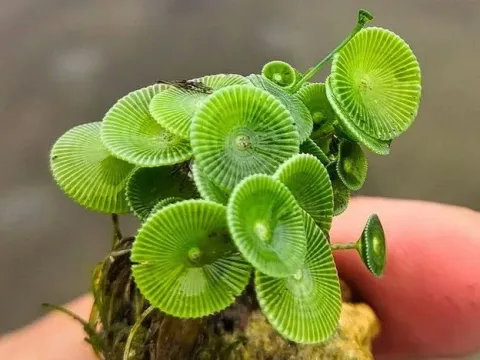
Acetabularia
Acetabularia
Acetabularia is a genus of single-celled green algae belonging to the Polyphysaceae family. It is widely known as a giant cell, as a single specimen can reach several centimeters in length, forming a complex structure with a stalk, rhizoids, and a cap.
What the section contains

Acetabularia
This culture is native to warm coastal regions and shallow tropical seas. It typically thrives in sun-drenched environments where it can anchor itself to rocky or calcareous substrates on the seabed.
For successful cultivation, the water temperature should be maintained consistently between 20°C and 25°C. Stability is essential, as the organism is highly sensitive to fluctuations in its aquatic environment.
Lighting requirements are significant; the algae requires adequate spectral output to facilitate photosynthesis. In indoor settings, specialized LED or fluorescent lighting systems are employed to mimic the natural marine sun cycles.
The water chemistry must replicate natural oceanic conditions, specifically regarding salinity and nutrient content. Monitoring the pH balance is critical to prevent degradation of the cellular wall and overall health.
The agricultural and scientific value of Acetabularia lies in its utility as a model organism. Because of its large size and distinct cellular organization, it is a primary subject in studies involving nuclear-cytoplasmic interactions.
Harvesting Acetabularia is a delicate process, usually conducted in controlled laboratory or biotechnical facilities. Since the entire organism is a single cell, the preservation of the cell membrane integrity during extraction is paramount.
Beyond academic research, there is growing interest in the potential of using its biochemical components in nutraceuticals and medicinal research. The compounds extracted from its cell wall and cytoplasm are being studied for regenerative properties.
Economic scalability is achieved through sophisticated bioreactor systems. These systems allow for precise management of growth conditions, ensuring a standardized yield for pharmaceutical research purposes.
Future prospects include the integration of Acetabularia into sustainable marine farming. By optimizing growth cycles, researchers aim to increase the sustainable production of biomass for large-scale industrial laboratory needs.
The most significant threat to Acetabularia in cultivation is the contamination by microalgae and fungi. These invasive organisms compete for light and nutrients, often leading to the suffocation of the main culture.
Mechanical damage from small crustacean predators remains a constant challenge in open or semi-closed cultivation systems. Rigorous filtration of the water intake is necessary to mitigate the entry of these pests.
Water quality degradation due to chemical imbalances is highly destructive. Acetabularia is extremely sensitive to heavy metals, which can be absorbed through the cell wall and lead to rapid toxicity.
Overexposure to intense ultraviolet radiation can cause cellular mutation and reduce the fertility of the reproductive cap. Precise control over the light spectrum is required to ensure long-term health.
System failures in thermal regulation are also a major risk factor. Even short-term deviation from the optimal temperature range can halt the biological activity and lead to the detachment of the rhizoids from the substrate.