
Acetabularia
Acetabularia acetabulum
Description
Growing requirements
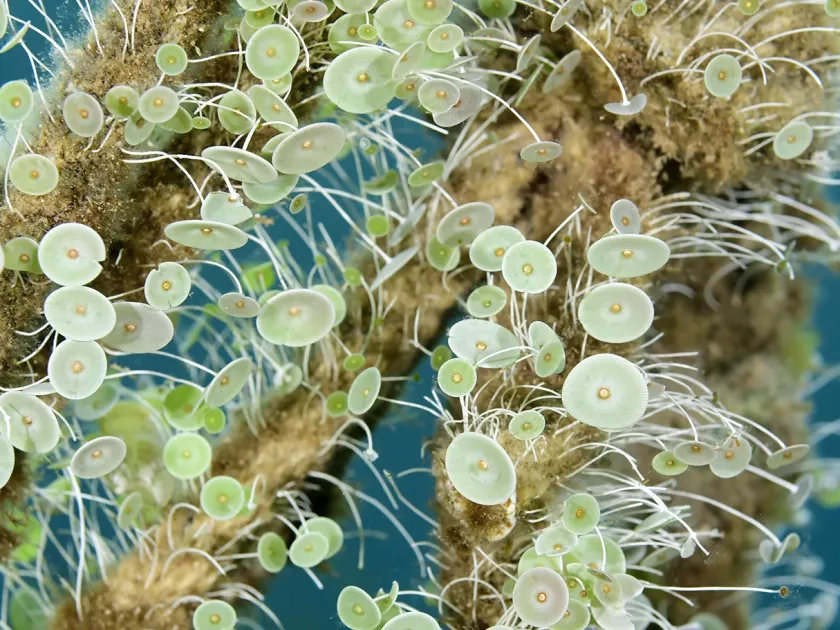
Acetabularia is a genus of green marine algae within the Polyphysaceae family, widely known in biology for its giant single-cell structure. Despite its simple cellular organization, it exhibits complex morphological differentiation into a stalk, rhizoids, and a characteristic cap.
The native distribution covers warm shallow coastal waters, particularly in the Mediterranean Sea. The algae thrive in nutrient-rich marine environments where light penetration is optimal for consistent photosynthesis and biomass accumulation.
Cultivation requirements for Acetabularia are strictly controlled due to its sensitivity to water quality. The culture environment must mimic high-salinity marine conditions with precise concentrations of magnesium, calcium, and essential trace elements required for the plant cell development.
Temperature management is critical for the lifecycle, requiring a stable tropical or subtropical range. Deviations from the optimal temperature can stall the reproductive phase, during which the cap forms cysts that eventually release gametes into the surrounding water.
Agrotechnical practices involve utilizing marine-grade substrates to anchor the rhizoids. Constant water circulation is essential to prevent biofilm accumulation, which inhibits the alga's access to light and dissolved nutrients necessary for its structural integrity.
Main diseases and pests
The primary threats to cultivated Acetabularia include bacterial blight and the overgrowth of competing epiphytic algae. These invaders consume available light and release toxins that disrupt the metabolic balance of the host organism within the tank.
Common pests include small grazing invertebrates that feed on the soft cellular membrane of the cap. Effective protection is achieved through meticulous mechanical filtration and by maintaining optimal salinity levels that discourage the proliferation of most opportunistic pests.