
Sweet corn
Zea mays L. subsp. mays (Sweet Corn Group)
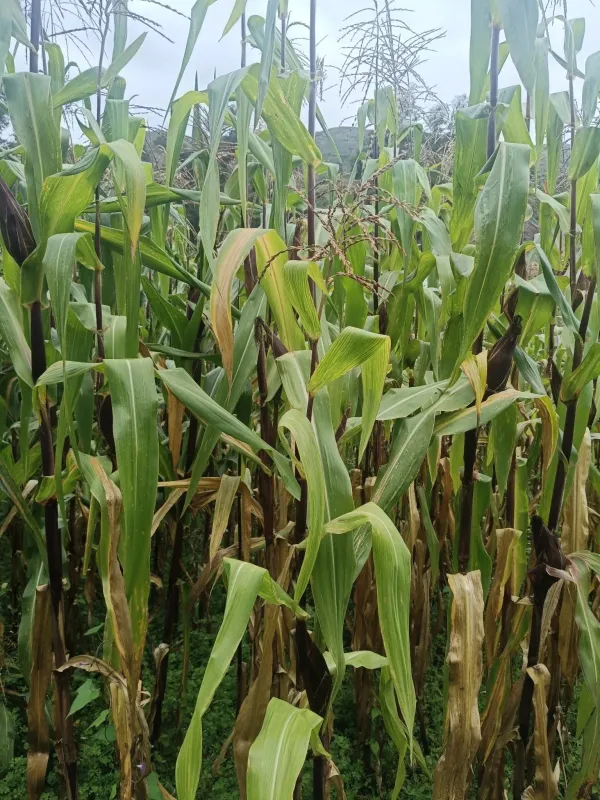
Description
Sowing dates
Sweet corn is a warm-season crop that requires soil temperatures of at least +10°C to +12°C for successful germination and initial seedling development.
Planting dates are strictly dictated by local climate; in temperate zones, sowing begins once the danger of spring frost has completely passed.
To ensure a continuous supply of fresh ears throughout the summer, farmers often utilize successional planting, spacing rows by 10 to 14 days.
Proper seed spacing and depth are critical; seeds are typically placed at a depth of 3 to 5 cm depending on soil moisture levels and texture.
Consistent plant population density is maintained to ensure each plant receives enough sunlight and nutrients to produce high-quality cobs.
Growing requirements
Sweet corn thrives in sunny locations as it is a highly photophilous plant that requires full exposure to solar radiation for optimal sugar development.
Well-drained, fertile, loamy soils with a pH ranging from 6.0 to 7.0 are considered ideal for achieving maximum vegetative growth and yield.
Water management is crucial during the silking and grain-filling stages; drought stress at these times significantly reduces the yield and kernel quality.
The crop requires high levels of organic matter and balanced fertilization, particularly nitrogen, to support rapid growth and chlorophyll production.
Adequate wind protection is often beneficial for taller varieties, as lodging can occur during strong storm events, negatively affecting harvest efficiency.
Yield
The yield of sweet corn depends on the specific variety, with modern hybrids capable of producing 12 to 18 tons of fresh ears per hectare.
Efficient weed control during the first four weeks after emergence is a primary factor in preventing yield loss and ensuring vigorous development.
Productivity is optimized by selecting high-quality hybrid seeds that exhibit resistance to common pathogens and provide uniform ear maturity.
Yield estimation takes into account the number of harvestable ears per hectare and the market demand for specific kernel color and sweetness levels.
Optimal spacing and precise nutrient delivery systems contribute significantly to increasing the net weight and uniformity of the harvested product.
Main diseases and pests
Corn earworm (Helicoverpa zea) is a major pest that directly damages the ear tip, significantly reducing the marketability of the crop.
European corn borer is another significant threat, causing structural damage to stalks and interfering with nutrient transport within the plant.
Fungal diseases like common rust and leaf blight can appear in humid conditions, often requiring integrated pest management strategies to control.
Aphids can transmit mosaic viruses, leading to stunted growth and reduced ear size, which necessitates monitoring of insect populations throughout the season.
- Integrated Pest Management (IPM)
- Use of pheromone traps
- Crop rotation practices
- Resistant hybrid selection
- Timely application of biopesticides
Harvesting
The harvest period is brief and critical, occurring when the ears reach the milk stage, characterized by soft, plump, and milky-textured kernels.
Harvest timing is determined by observing the silk; when it turns dark brown and dry, the kernels are typically at peak sweetness and flavor.
Sweet corn loses sugar content rapidly after harvest, as enzymes convert natural sugars into starch, especially if stored at ambient temperatures.
To maintain peak quality, post-harvest cooling (hydro-cooling or cold storage) should be performed immediately to halt the respiration process.
Small-scale operations often utilize hand-harvesting to minimize bruising, while large-scale production relies on specialized machinery to ensure efficiency.