
Corn
Zea mays L. subsp. Mays
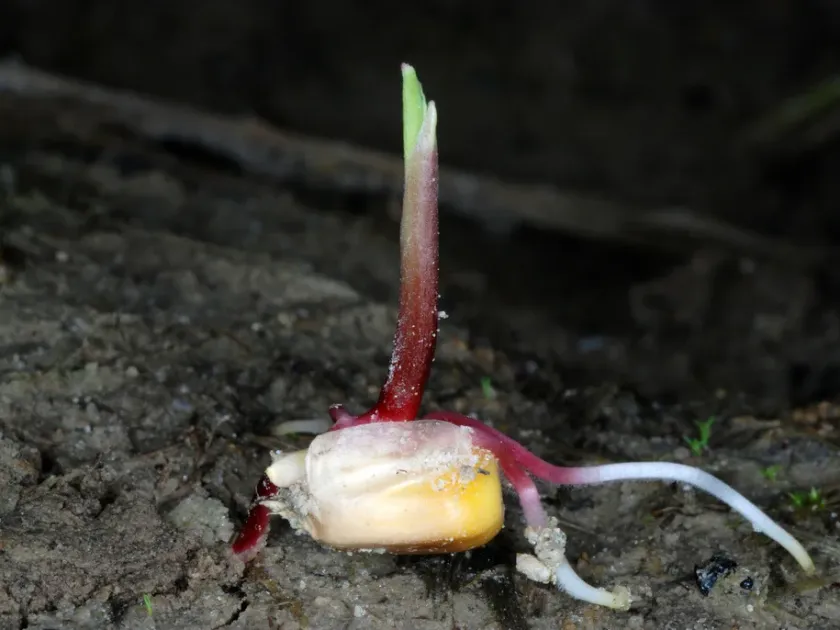
Description
Sowing dates
Corn (Zea mays L.) requires soil temperatures to reach at least 10–12 °C before planting begins. Cold and wet soil conditions at sowing often lead to seed rot and uneven stand establishment.
The standard planting depth is between 5 and 8 cm. Proper depth ensures that the nodal roots develop in a stable environment, which is crucial for the plant's overall anchorage and nutrient uptake.
Row spacing is typically 70–75 cm for commercial field corn. This spacing facilitates efficient weed management and allows for the use of standard harvesting equipment without damaging the standing crop.
Plant density is a major factor in yield determination, ranging from 45,000 to 95,000 plants per hectare depending on water availability, soil quality, and the hybrid's genetic potential.
Precision planting technology is highly recommended to achieve uniform emergence. Uniformity ensures that all plants compete equally for sunlight and nutrients, preventing the formation of dominant or suppressed plants.
Growing requirements
Belonging to the Poaceae family, corn is a C4 plant that thrives in high-light environments. It requires significant solar radiation for optimal photosynthetic performance and biomass accumulation.
Fertile, well-drained silt loam soils provide the ideal conditions for corn. The soil pH should be maintained between 6.0 and 7.0 to maximize nutrient availability, particularly for phosphorus and micronutrients.
Water requirements are highest during the silking and pollination phases. Drought stress during these critical stages can lead to poor kernel set and significantly reduced ear size.
Nutrient management involves high applications of nitrogen, phosphorus, and potassium. Nitrogen is particularly essential during the rapid vegetative growth phase (V6 to V10 stages).
Weed control must be prioritized during the first 30 days of growth. Weeds compete aggressively for nitrogen and water, which can stunt the corn seedlings and reduce final yield potential.
Yield
Yield potential in modern maize hybrids is impressive, with top-tier producers achieving 12–16 tons per hectare under irrigation. Non-irrigated yields are naturally more dependent on rainfall distribution.
Yield components consist of the number of ears per plant, kernels per row, and kernel weight. Genetic improvements have made corn more resistant to stress, leading to more stable yield performance.
For silage, the focus shifts to total biomass and energy content. Harvesting at the correct maturity stage ensures that the starch content and fiber digestibility are balanced for livestock feed.
Factors that limit yield include planting delays, inadequate fertilizer programs, high weed pressure, and severe disease outbreaks during the grain fill period.
Advanced farming practices, such as variable rate fertilization, are increasingly used to match nutrient application with the yield potential of specific soil zones within the same field.
Main diseases and pests
The European corn borer is one of the most destructive pests, as its larvae tunnel into stalks, causing structural damage and providing entry points for fungal pathogens.
Fungal diseases like Fusarium ear rot and common smut are common threats. These diseases not only reduce yield but can also produce mycotoxins that affect the safety and value of the grain.
Integrated Pest Management (IPM) is essential. This includes crop rotation, planting pest-resistant transgenic hybrids, and timely scouting to decide if insecticide applications are necessary.
Seed treatments are standard practice to protect against soil-borne pests and seedling diseases. This early protection is vital for achieving a robust initial plant stand.
- European corn borer
- Wireworms
- Fusarium ear rot
- Common smut
- Root rot
Harvesting
Harvesting for grain typically occurs when kernel moisture drops to 25–30%. Many commercial growers use grain dryers to allow for earlier harvesting, which clears fields for winter crop preparations.
Combines are equipped with specialized corn headers designed to strip ears while leaving stalks and leaves behind. Proper machine calibration is critical to minimize kernel cracking.
For silage production, harvesting occurs when the entire plant reaches 30–35% dry matter. This is the optimal window for maximizing energy and ensuring excellent fermentation in the silo.
Post-harvest management involves cooling the grain and maintaining moisture levels below 14% to prevent mold growth and insect infestation in storage facilities.
Stalk residue management is a key consideration for soil health. Incorporating residues back into the field recycles nutrients, though it requires sufficient time or microbial agents for breakdown.