
Palmgrass
Setaria palmifolia (Koen.) Stapf
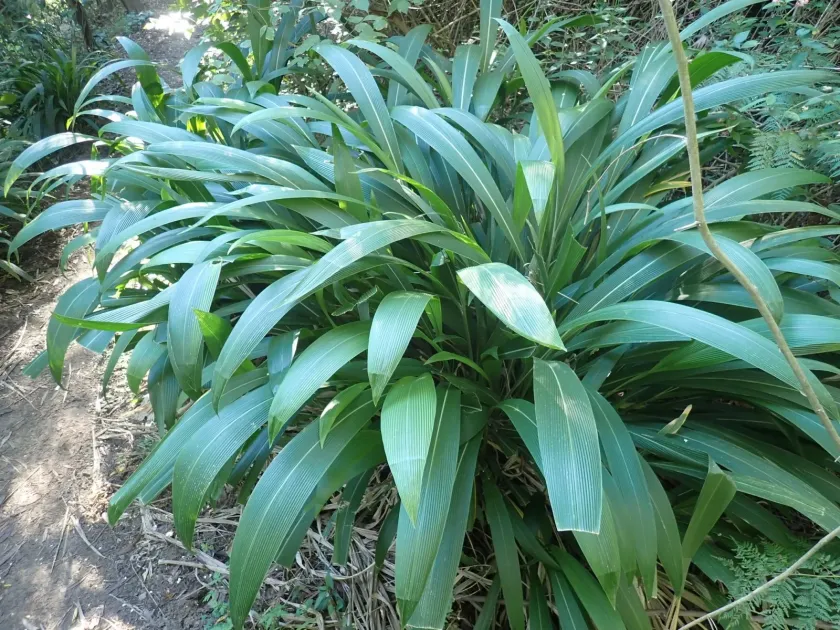
Description
Sowing dates
Sowing palmgrass is typically carried out in spring, once the soil has warmed sufficiently and the risk of frost has completely passed for the season.
Seeds are sown shallowly, ideally at a depth of 1 to 2 centimeters, ensuring they remain in contact with moist soil to facilitate rapid and uniform germination.
For areas with shorter growing seasons, starting the plants indoors in trays is a highly effective method to ensure vigorous seedling establishment.
Spacing is a critical factor during sowing; ensuring adequate distance between plants allows them to develop their characteristic broad, palm-like leaves fully.
Thinning out seedlings in the early stages promotes better growth for the remaining plants, leading to a denser and healthier canopy later in the season.
Growing requirements
Setaria palmifolia thrives in fertile, well-draining soils and prefers locations that offer partial shade to protect its leaves from harsh midday sun.
Water requirements are relatively high; consistent moisture is essential to prevent the leaf tips from browning and to maintain the plant's overall vitality.
While the plant is adaptable, it performs best in soils rich in organic matter, where balanced fertilization supports its fast growth and lush appearance.
Good air circulation is vital when cultivating palmgrass to prevent the accumulation of humidity, which can lead to various fungal pathogens in the foliage.
In regions with intense heat, providing supplemental humidity or ensuring consistent soil moisture helps the plant cope with environmental stress.
Yield
Agricultural yield in terms of green biomass is impressive when the plant is grown under optimal tropical or subtropical conditions with sufficient irrigation.
The biomass harvested from this species is highly regarded for its nutritional content when cut at the correct stage of vegetative maturity.
Regular harvesting cycles can be established in high-yield scenarios, allowing for multiple cuts during a single, long growing season.
Managing the plant density and soil fertility are the primary drivers for maximizing the total biomass output per unit of land area.
The yield potential makes it a viable candidate for sustainable forage production in integrated farming systems where diverse crops are utilized.
Main diseases and pests
Fungal issues, such as leaf spot, are the most common threats to palmgrass, particularly in environments with poor drainage and high ambient humidity.
Pests like spider mites can be problematic during dry spells, quickly colonizing the broad leaves if the plant's natural resistance is compromised by drought.
Proper hygiene, such as removing fallen leaf litter and ensuring weed-free zones, significantly reduces the likelihood of infection and pest infestations.
Early intervention with environmentally friendly management strategies is highly recommended to protect the crop from significant damage.
Monitoring the undersides of leaves during peak growth phases helps in detecting early signs of pest pressure before they reach an economic damage threshold.
Harvesting
Harvesting for forage is ideally timed at the late vegetative stage, before the plant allocates significant energy reserves into forming seed heads.
The use of mechanical mowers is efficient for large-scale operations, ensuring clean cuts that promote vigorous regrowth in subsequent cycles.
If harvested for ornamental purposes, the timing is flexible, although cutting back at the end of the season helps the plant enter a healthy winter dormancy.
Post-harvest management involves rapid handling to ensure the fresh biomass retains its moisture and nutrient levels before feeding or processing.
Strategic scheduling of the harvest based on local weather patterns is essential to avoid losses due to excessive rainfall during the drying or collection process.