
Foxtail millet
Setaria italica (L.) P. Beauv.
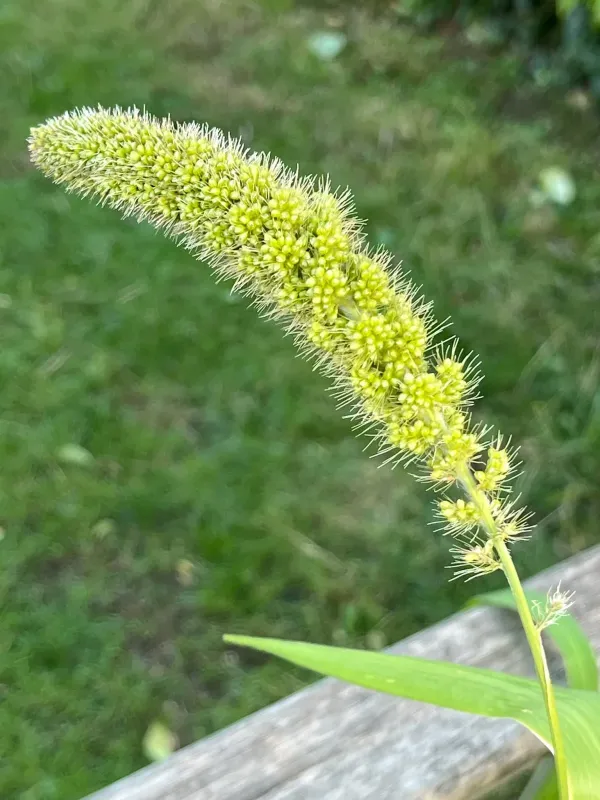
Description
Sowing dates
Sowing foxtail millet (Setaria italica) should only be carried out once the soil temperature reaches at least 12–14 degrees Celsius at the seeding depth. Being a heat-loving crop, foxtail millet is highly sensitive to cold, and premature sowing often leads to poor stand establishment and low crop density.
The optimal sowing window typically aligns with late spring, often the second half of May, when the risk of frost has passed. This timing ensures that the soil has retained enough moisture for rapid germination, allowing the plants to establish a strong root system before the onset of summer heat.
Due to the small size of foxtail millet seeds, the sowing depth must be carefully controlled, ideally between 2 and 3 centimeters. Placing seeds too deep significantly hinders emergence, as the fragile sprouts may struggle to reach the surface, while overly shallow sowing risks the seeds drying out.
Seeding rates typically range from 8 to 10 kg per hectare for drill seeding, though this may vary depending on the row spacing and the specific soil conditions. Achieving an even distribution of seeds is critical for maximizing the utilization of space and nutrients throughout the growing season.
Field rolling is a crucial post-sowing practice. It improves soil-seed contact, promotes capillary moisture movement toward the seeds, and helps ensure uniform germination across the field, which is a fundamental prerequisite for achieving a high and consistent yield.
Growing requirements
Foxtail millet belongs to the Poaceae family and is renowned for its remarkable drought tolerance, making it an excellent candidate for regions with limited rainfall. Its fibrous, extensive root system allows the crop to effectively extract moisture from deeper soil horizons during dry spells.
While the crop is adaptable to various soil types, it performs best in fertile loams and chernozems with a neutral to slightly alkaline pH. It generally does not thrive in waterlogged, highly acidic, or excessively saline soils, which can severely stunt growth and development.
As a short-day plant, foxtail millet has specific light requirements for flowering and grain set. Abundant solar radiation during the vegetative phase promotes robust biomass accumulation, which is essential for high yields in both forage and grain production scenarios.
Weed control is of utmost importance during the first four weeks of the plant's life. Because foxtail millet grows relatively slowly in its initial stages, it can be easily outcompeted by weeds, necessitating timely harrowing or inter-row cultivation to ensure the crop remains the dominant species.
Foxtail millet serves multiple purposes, providing high-quality grain rich in protein and essential amino acids, as well as providing nutritious green fodder, hay, or silage for livestock. Its versatility makes it an invaluable crop in sustainable integrated farming systems.
Yield
The grain yield potential of foxtail millet typically ranges from 20 to 30 centners per hectare under optimal agronomic conditions. In highly fertile environments with favorable rainfall distribution, yields can be significantly higher due to the plant's ability to tiller effectively.
When grown for forage, foxtail millet can produce impressive biomass yields, often reaching 200–300 centners of green matter per hectare. Its ability to regrow after cutting is a major advantage, potentially allowing for two harvests per season if moisture conditions remain adequate.
Yield performance is strongly influenced by nutrient management, particularly nitrogen fertilization applied at the stem elongation stage. Nitrogen effectively stimulates canopy development and panicle size, directly increasing both grain weight and total forage biomass.
Managing plant density is essential for success; over-seeding can lead to intense competition for light and nutrients, resulting in thinner stems and increased susceptibility to lodging. An optimized planting density ensures that each plant reaches its full productive potential.
The crop's reliability is further enhanced by its high resistance to grain shattering, providing farmers with a wider window for harvesting. This characteristic significantly reduces the risk of crop loss during harvest if adverse weather conditions occur in late summer.
Main diseases and pests
Smut is the most significant disease affecting foxtail millet, as it replaces the grain with masses of black fungal spores. Preventive measures include using certified, treated seed and strictly adhering to crop rotation practices to minimize soil-borne pathogen buildup.
Cereal flies are major insect pests that target the growing points of young seedlings. Implementing systemic insecticide treatments or utilizing appropriate planting windows can significantly reduce the impact of these pests and ensure a uniform crop stand from the beginning.
Rust may appear on leaves under conditions of high humidity and moderate temperatures, manifesting as reddish-brown pustules. This disease reduces the photosynthetic efficiency of the crop, ultimately leading to smaller grain size and lower overall harvest quality.
The foxtail millet midge can also pose a threat by attacking the developing panicles. Integrated pest management, including spatial isolation from other millet species and the prompt destruction of crop residues, is effective in keeping midge populations below damaging thresholds.
Maintaining high agricultural standards is the best defense against threats. Deep fall plowing helps destroy overwintering stages of pests and reduces the primary inoculum of fungal diseases, providing a cleaner environment for the following season's crop.
Harvesting
Harvesting for grain should be initiated once the crop reaches full maturity, characterized by hard grains and a uniform yellow coloration of the plant. At this stage, grain moisture content has naturally decreased, facilitating easier processing and storage.
A two-stage harvesting process, involving cutting into windrows followed by combine harvesting after drying, is often the most effective method. This approach allows the grain to reach uniform moisture levels, reducing mechanical damage during the final threshing phase.
During threshing, it is vital to carefully adjust the drum clearance, as the small, delicate grains of foxtail millet can be easily cracked or crushed. Precision settings prevent seed coat damage and ensure the resulting grain meets market quality requirements.
For hay production, the optimal harvest time is the early heading stage. During this period, the plant contains the highest concentration of digestible nutrients, and the stems are still tender enough for optimal palatability and consumption by livestock.
Post-harvest conditioning includes thorough cleaning to remove field debris and careful drying to reach a safe moisture content of 13–14%. Proper storage in cool, dry conditions preserves the grain’s viability and nutritional value for extended periods.