
Chrysopogon aucheri
Chrysopogon aucheri
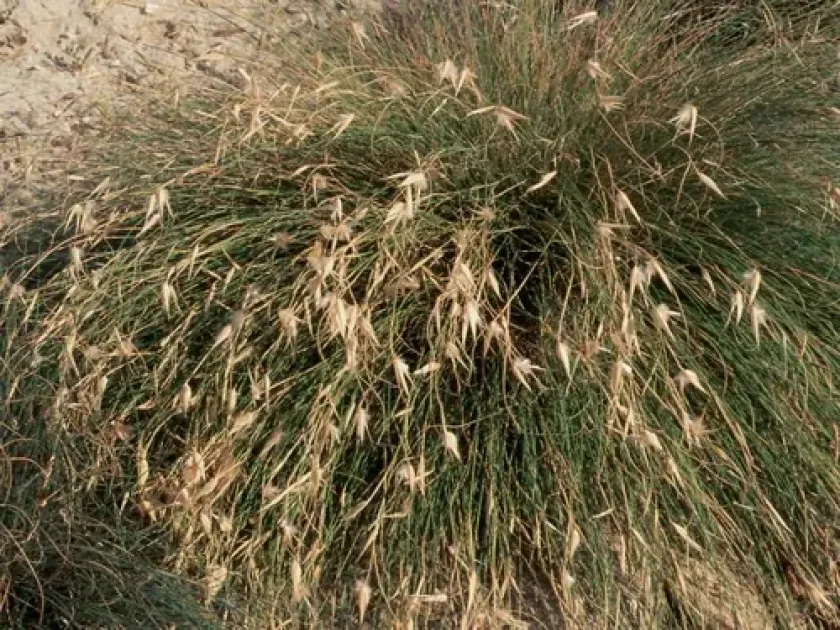
Description
Growing requirements
Chrysopogon aucheri is a perennial grass species belonging to the Poaceae family. It is highly regarded for its resilience in arid and semi-arid regions, where it serves as a vital component of local vegetation and forage resources.
Native to various parts of the Middle East and Asia, this plant thrives in rocky soils and slopes. Its distribution area is characterized by low rainfall and high temperatures, conditions under which many other forage crops would fail to survive.
The botanical structure of the plant is defined by robust, dense tufts and a deep, extensive root system. These adaptations allow the plant to stabilize soil, prevent erosion, and maintain productivity during prolonged periods of drought.
The species requires well-drained soils and is particularly known for its tolerance to salinity and alkalinity. It flourishes in soils that are often unsuitable for conventional cereal cultivation, making it a sustainable choice for land restoration.
Agronomic management involves site preparation that promotes moisture infiltration and avoiding overgrazing. The plant is best suited for extensive management systems, where its natural vigor can be utilized for long-term land productivity.
Main diseases and pests
One of the primary advantages of Chrysopogon aucheri is its high inherent resistance to pests and diseases. Unlike domesticated cereals, it has evolved in wild environments where it naturally combats most common plant pathogens.
Rust diseases can occasionally affect the leaves if the plant is exposed to extreme humidity or waterlogging. Therefore, selecting sites with proper slope and drainage is the most effective biological control measure for fungal threats.
Insect pressure is generally low, although grasshoppers and certain beetle species can occasionally consume the foliage. Significant damage is rarely reported unless local populations of these pests reach outbreak levels.
The biggest threat to this culture is the lack of proper grazing management. If livestock are allowed to graze the plants too early in the growing season, it can inhibit seed production and weaken the plant's ability to regenerate.
Weed management is critical only during the seedling stage. Once the grass reaches the tillering phase, it establishes a dense root system and foliage cover that effectively suppresses most competing opportunistic plant species.