
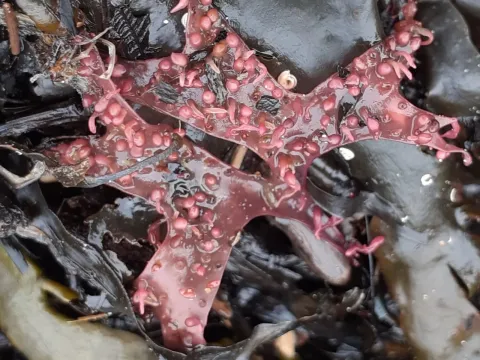
Mastocarpus
Mastocarpus
Mastocarpus is a genus of red algae belonging to the Phyllophoraceae family. These marine organisms are widely distributed in the cold and temperate coastal zones of the Atlantic and Pacific Oceans, where they typically anchor to rocky substrates in intertidal regions.
What the section contains

Mastocarpus
A distinctive feature of Mastocarpus is its heteromorphic life cycle, which includes a macroscopic thallus stage and a microscopic crust-like phase known as Petrocelis. This complex development allows the algae to endure harsh intertidal conditions, including desiccation and significant temperature fluctuations.
Successful growth of Mastocarpus requires high water salinity and constant water movement to supply the necessary nutrients. It thrives in areas with robust wave action, which prevents sediment accumulation and ensures adequate oxygenation for photosynthesis.
In aquaculture, the cultivation of Mastocarpus relies on providing stable, hard surfaces for spore attachment. Proper site selection in clean, unpolluted waters is critical to maintaining the health and nutritional quality of the algal crop.
The plant exhibits high adaptability to cool water temperatures, making it a sustainable choice for cultivation in northern latitudes. It demonstrates resilient vegetative growth patterns, capable of regenerating effectively after seasonal harvesting, provided the holdfast remains intact.
The yield of Mastocarpus is determined by the density of the coverage on the substrate and the environmental stability of the habitat. Proper management of these factors in a mariculture setting leads to significant increases in biomass compared to wild harvesting methods.
Productivity metrics are highly dependent on the season, as the accumulation of phycocolloids varies throughout the year. Farmers aim to harvest when the biomass and the concentration of chemical compounds are at their seasonal peak.
Environmental threats to Mastocarpus include rising ocean temperatures and local water pollution, which can disrupt growth cycles. Climate change-related shifts in ocean chemistry may also favor the growth of invasive species that compete for space and sunlight.
Biological pests, particularly gastropods and sea urchins, can cause significant damage by grazing on the thalli. Sustainable cultivation strategies often involve monitoring these populations and timing the harvest to minimize loss to natural predation.
Harvesting Mastocarpus involves systematic collection during the peak growth season, often using manual techniques to preserve the holdfast for future regrowth. Mechanical harvesting is also employed in large-scale farms, requiring precise equipment to ensure sustainable yields.
Once harvested, the seaweed must be cleaned, washed, and dried to maintain its structural integrity for industrial processing. The end product is primarily used to extract carrageenan, a vital hydrocolloid utilized in food processing, dairy production, and medicine.