
Mastocarpus stellatus
Mastocarpus stellatus
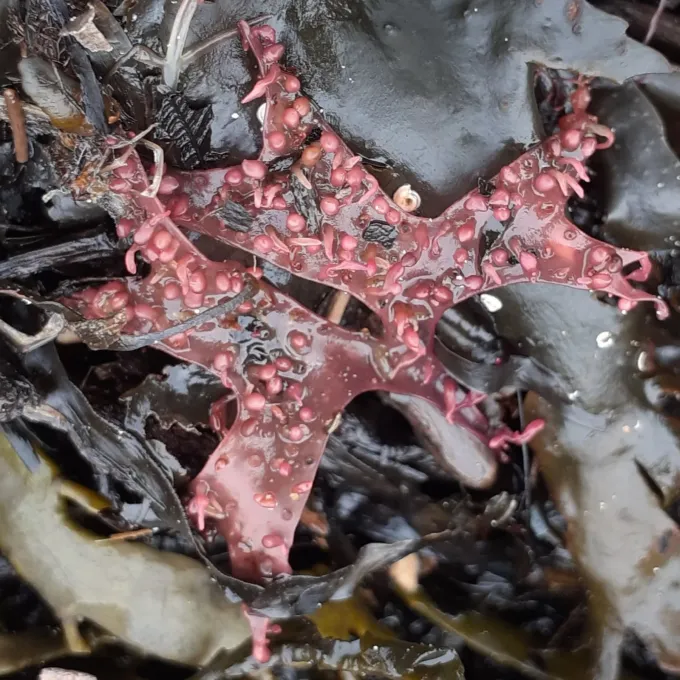
Description
Growing requirements
Mastocarpus stellatus is a species of red algae belonging to the Phyllophoraceae family. It is commonly found on rocky shores along the North Atlantic coast, where it thrives in the intertidal zone, attaching firmly to substrates with its disc-like holdfast.
The plant is highly resilient to desiccation, as it frequently spends hours exposed to air during low tide cycles. It requires high-quality, mineral-rich seawater and thrives in cool to temperate climatic conditions, which are characteristic of its native habitat.
Water movement is a critical requirement for this species, as it ensures the constant supply of dissolved gases and nutrients necessary for photosynthesis. Effective cultivation requires clean waters away from heavy pollution sources to maintain the purity of the harvested biomass.
Soil or bottom structure is essential for the colonization of this algae. It prefers solid surfaces like rocky reefs or artificial substrates that mimic the natural environment, providing a stable foundation for the growth of the thallus.
Light availability is a fundamental factor for growth. The plant utilizes specific wavelengths of light to conduct photosynthesis efficiently, so depth and water clarity are parameters that farmers must manage to ensure optimal density and production rates.
Yield
Yield estimation for Mastocarpus stellatus is based on the annual production of biomass per square meter of cultivated surface. Sustainable management practices ensure that harvest levels do not exceed the natural recovery rate of the population.
In mariculture, yield is optimized through controlled growth conditions and strategic placement of substrates in high-nutrient currents. Producers monitor growth rates throughout the seasons to identify the peak harvest window.
Productivity is closely linked to the chemical composition of the seaweed. Harvesting at the peak of polysaccharide development allows producers to maximize the market value of the biomass, which is rich in carrageenan.
Technological advancements in seaweed farming allow for higher yields compared to wild harvesting. By employing professional thinning and monitoring methods, farmers can achieve consistent output year over year.
Effective agricultural planning involves analyzing water chemistry and local current patterns to predict annual yield. This data-driven approach minimizes risks and supports the long-term viability of the seaweed industry.
Harvesting
The harvest of Mastocarpus stellatus is typically executed during low tide, requiring manual or semi-automated tools. It is crucial to employ selective harvesting techniques, removing only the mature blades while preserving the base to allow for rapid regeneration.
Post-harvest processing begins with thorough cleaning to remove organic debris, epiphytes, and sand. This initial step is vital for meeting quality standards required by industrial end-users in the food and cosmetic sectors.
Drying is the most critical post-harvest process. Rapid drying is necessary to stabilize the product and prevent the enzymatic degradation of the carrageenan components, which are highly sensitive to moisture and microbial activity.
Storage requires cool, dry, and well-ventilated facilities to maintain product integrity over time. Proper packaging prevents humidity exposure, which is the primary cause of degradation during transportation and extended storage periods.
Quality control throughout the harvesting process ensures that the final product meets regulatory specifications. This includes monitoring for contaminants and verifying the physical-chemical properties of the dried seaweed before distribution.