
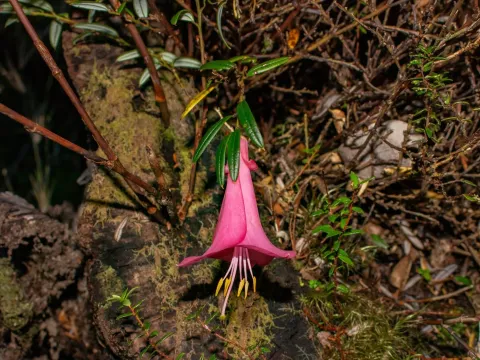
Philesia
Philesia
Philesia is an evergreen shrub belonging to the Philesiaceae family, represented by the single species Philesia magellanica. Native to the temperate rainforests of southern Chile and Argentina, this plant is well-adapted to cool, humid environments with mild seasonal changes.
What the section contains

Philesia
Climate requirements are strict: the plant thrives in areas with consistent moisture and mild temperatures. It is highly sensitive to extreme heat and drought, which makes it an ideal candidate for greenhouse cultivation or specialized cool-climate gardens in specific zones.
Regarding soil preferences, Philesia demands well-drained, acidic conditions. A mixture rich in organic matter, such as peat moss, leaf mold, and pine bark, provides the necessary structure and nutrient profile that mimics its natural forest floor habitat.
Standard horticultural practices include maintaining high ambient humidity and avoiding waterlogging. Regular, light watering is preferred over deep saturation, as the fine root system of this shrub is susceptible to rot if left sitting in stagnant water.
In terms of usage, Philesia is primarily utilized as an ornamental plant. Its striking, waxy red flowers make it a prized specimen for collectors of exotic vegetation who can provide the necessary cool, shaded conditions for healthy growth and blooming.
Fungal diseases related to poor drainage and inadequate airflow are the primary threats to the health of Philesia. Root pathogens thrive when the plant is kept in containers with compacted, non-porous soil mixtures, leading to wilting and decline.
Pest problems typically involve sap-sucking insects like spider mites and scale insects. These pests are particularly problematic in greenhouse settings where air circulation is restricted, necessitating proactive monitoring and localized treatments to preserve foliage.