
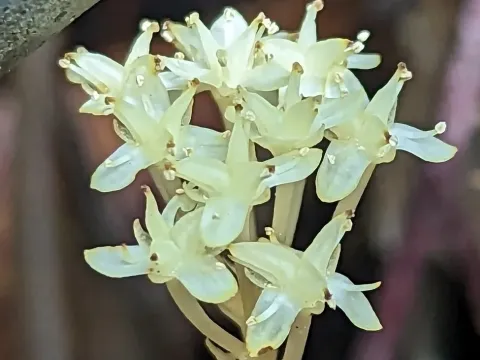
Petrosavia
Petrosavia
Petrosavia is a unique genus of monocotyledonous plants that constitutes the core of the family Petrosaviaceae. These plants are scientifically recognized for their highly specialized life strategies and evolutionary lineage within the order Petrosaviales.
What the section contains

Petrosavia
The defining characteristic of Petrosavia is its mycoheterotrophic nature. Lacking chlorophyll, the plant does not perform photosynthesis and instead relies entirely on nutrient acquisition through symbiotic associations with soil fungi, which provide the energy required for its growth.
The natural distribution of the genus is concentrated in the humid forest ecosystems of East and Southeast Asia. Countries such as Japan, China, Vietnam, and Malaysia provide the necessary ecological niches, characterized by high humidity and specific soil biodiversity.
Because of its absolute requirement for specific fungal partners, Petrosavia cannot be cultivated as an agricultural crop. Traditional agronomic practices, such as sowing, fertilization, or mechanical harvesting, are inapplicable to this wild plant species.
The study of Petrosavia remains limited to the botanical and ecological research sectors. It holds no value for commercial agriculture, food production, or industrial use, as it serves as a critical model for understanding plant evolution and extreme adaptation mechanisms.