
Royal fern
Osmunda regalis
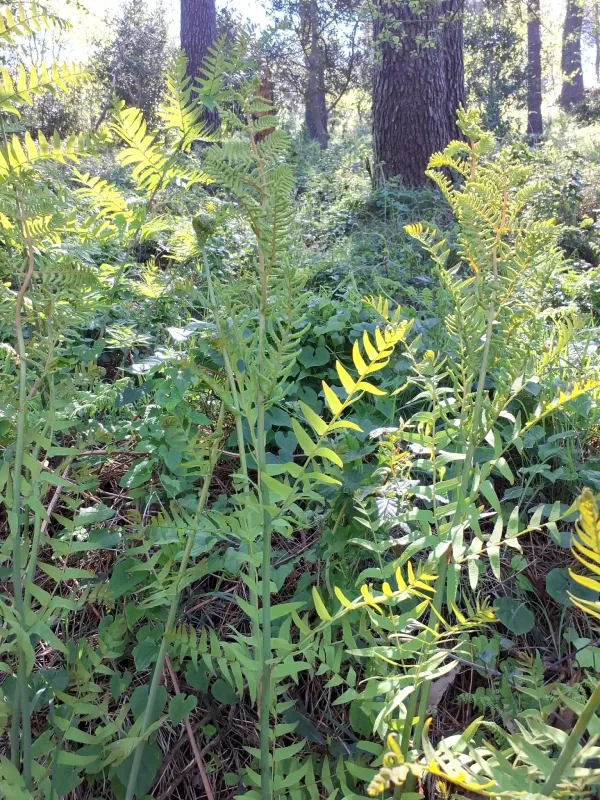
Description
Growing requirements
The Royal fern (Osmunda regalis) is a perennial deciduous fern belonging to the Osmundaceae family. It is widely recognized for its stately appearance, often reaching significant heights under optimal environmental conditions.
This species is native to wetlands, fens, and woodlands across Europe, Africa, Asia, and the Americas. In agricultural practice, it is treated as a highly moisture-dependent crop that thrives in acid-rich, damp soil types.
When selecting a planting site, growers must ensure deep, humus-rich soil that stays consistently wet. The Royal fern is particularly well-suited for riparian zones or garden areas designed with irrigation systems that mimic natural bogs.
Though it tolerates sun exposure, the plant requires higher humidity levels in sunnier locations. Partial shade is generally considered the best environment to prevent leaf scorch and maintain the plant's structural integrity.
The establishment phase requires careful soil preparation. Adding organic matter, such as peat or leaf mold, helps to improve soil structure and acidity, which is essential for the healthy development of the root system.
Main diseases and pests
The Royal fern is remarkably robust and rarely suffers from major pest infestations or severe plant diseases when grown in its ideal, moist environment. It is considered a low-maintenance plant for specialized horticulture.
Slugs and snails are the most common pests, especially in early spring when the new fronds are unfurling. Using mechanical barriers or organic molluscicides is often sufficient to prevent significant damage.
Root rot is the primary physiological threat, usually occurring due to soil compaction or poor drainage. Ensuring that the soil remains moist but not waterlogged is crucial for disease prevention.
Leaf spots may occasionally appear if the plant is stressed by fluctuating water levels or poor air circulation. Proper spacing between individual plants is recommended to allow for adequate ventilation.
No systemic chemical treatments are typically required for this species. Good sanitation, such as removing debris from the base of the plant, maintains hygiene and prevents the onset of fungal infections.