
Interrupted fern
Osmunda claytoniana
Description
Growing requirements
The Interrupted fern (Osmunda claytoniana) is a perennial species within the Osmundaceae family, known for its distinctive appearance and robust nature. It is native to the temperate regions of North America and Eastern Asia, thriving in woodland environments.
Cultivation success depends on providing a shaded environment. These ferns prefer partial to full shade locations, as their delicate fronds are susceptible to damage from harsh sunlight. Planting under a canopy of deciduous trees replicates their natural forest habitat.
Soil conditions are critical for this species. It requires deep, humus-rich, acidic soil that remains consistently moist. Ensuring adequate soil aeration and drainage is vital, as the roots do not tolerate stagnant water or anaerobic conditions for prolonged periods.
Water management is the most important aspect of maintenance. During summer heatwaves, deep watering is essential to prevent wilting. Mulching with organic matter helps retain soil moisture and stabilizes the temperature of the root zone.
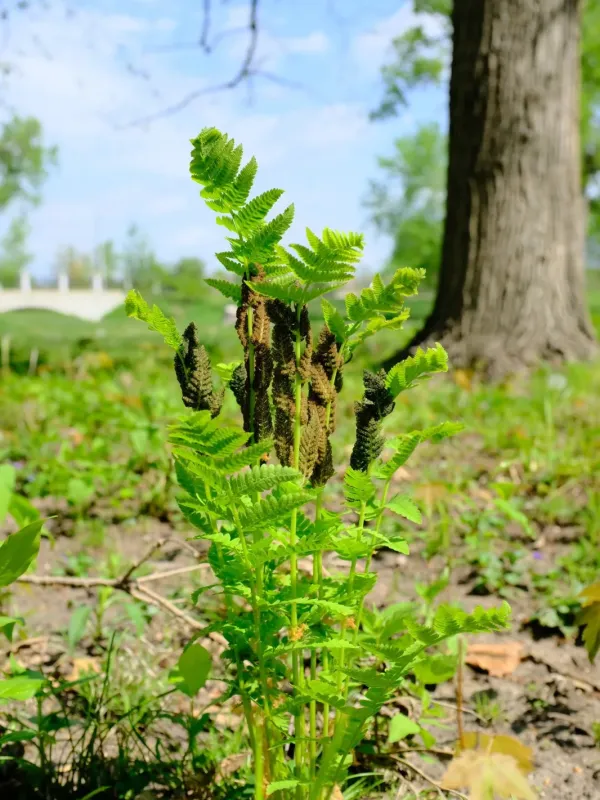
The botanical unique feature of this plant is the interruption of the fertile frond sections. The central part of the leaf holds the sporangia, appearing as a break in the green leafy tissue, which gives the plant its common name and adds aesthetic value.
Main diseases and pests
The Interrupted fern is generally pest and disease-resistant when provided with optimal growing conditions. However, poorly drained soil can lead to root rot, caused by fungal pathogens that thrive in consistently waterlogged substrates.
Slugs and snails are the most common pests, particularly in moist, shady garden beds. They are attracted to the succulent new growth of the fern. Integrated pest management strategies, such as physical barriers or slug pellets, are effective in controlling their population.
Foliar diseases, such as leaf spots, are uncommon but may occur in areas with poor airflow and high humidity. Ensuring adequate space between individual plants reduces the likelihood of these issues developing.
Occasionally, scale insects or aphids may appear on the undersides of the fronds. While rarely lethal, they can cause stunted growth if left unmanaged. Manual removal or insecticidal soaps can be used for mitigation.
Good garden hygiene, such as clearing away decaying leaf litter or debris during the dormant season, significantly reduces the overwintering sites for potential pests and spores of fungal diseases.