
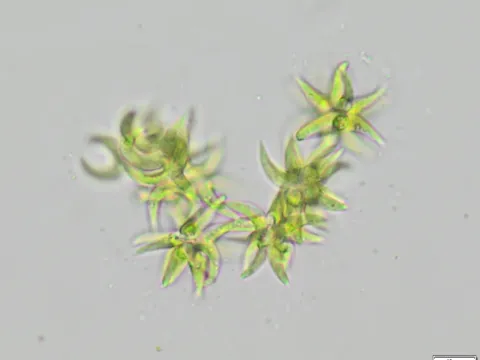
Selenastrum
Selenastrum
The cultivation of Selenastrum begins with the inoculation of a pure algal strain into a sterilized nutrient-rich aqueous medium.
What the section contains

Selenastrum
As a single-celled green alga, Selenastrum requires specific conditions to initiate its exponential growth phase in a bioreactor.
The inoculation process is critical; a high-density starter culture ensures rapid colonization and reduces the risk of competitive biological contamination.
Controlled environments, such as closed photobioreactors, are preferred to maintain the purity of the specific strain being grown.
Timely inoculation ensures that the nutrient balance is efficiently utilized, leading to a higher final biomass density.
Selenastrum thrives in a medium with a pH range of 7.5 to 8.5, which facilitates optimal nutrient uptake and carbon assimilation.
Consistent lighting is essential, as Selenastrum is a photosynthetic organism that relies heavily on light intensity for cell division.
Nitrogen, phosphorus, and potassium are key macronutrients that must be supplied in precise ratios to maximize growth rates.
Aeration systems are required to supply carbon dioxide and to keep the cell suspension in constant motion, preventing settling and ensuring gas exchange.
Maintaining a stable temperature of 20–25 degrees Celsius is crucial for consistent cellular metabolic activity and development.
The yield of Selenastrum is measured by the total biomass harvested per liter of medium over a defined cultivation period.
High-density cultivation techniques can result in multiple harvest cycles per month, providing a steady supply of biomass.
Productivity is highly dependent on the quality of light and the availability of dissolved CO2 within the system.
Optimized systems can produce significant amounts of protein-rich biomass suitable for feed additives in aquaculture and livestock.
Advancements in bioreactor design have significantly increased the potential yield, making Selenastrum an attractive candidate for industrial scale-up.
Contamination by invasive microorganisms, such as ciliates or other algae species, poses the most significant risk to pure cultures.
Viral or bacterial infections can cause rapid collapse of the population if environmental controls are not strictly maintained.
Excessive light intensity can cause photo-inhibition, damaging the cells and drastically reducing the overall productivity of the crop.
Fluctuations in pH or nutrient depletion can lead to metabolic stress, causing the cells to switch from growth to senescence.
The accumulation of waste products in recirculated media can inhibit growth if the purification systems are not functioning correctly.
Harvesting Selenastrum typically involves physical separation methods such as centrifugation or membrane filtration to concentrate the cells.
Chemical flocculation is often used in larger systems to aggregate the algae, making the filtration process more cost-effective.
Once harvested, the algal paste is usually dried into a powder, which preserves its nutritional value for storage and transport.
Efficiency in the harvesting process is essential to maintain the structural integrity of the cells and prevent degradation of lipids and proteins.
Post-harvest, the remaining medium can be recycled after filtration and nutrient replenishment to minimize water consumption and waste.