
Narrow-leaved evening primrose
Oenothera perangusta
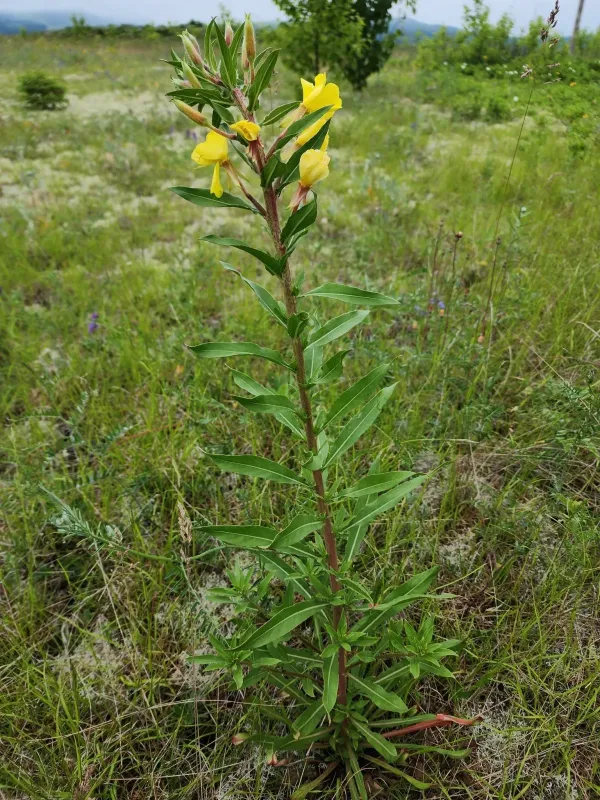
Description
Sowing dates
Sowing of Oenothera perangusta, a member of the Onagraceae family, is primarily conducted in the spring when soil temperatures reach 10–12°C. In regions with milder climates, late autumn sowing is possible, which facilitates natural seed stratification and leads to more uniform germination.
To establish a productive crop, seeds are sown in rows with spacing of approximately 45–60 cm. The seeding depth is shallow, typically 0.5–1 cm, as the seeds are fine and require sufficient light exposure to initiate successful germination in the topsoil layer.
A crucial factor during sowing is ensuring high purity of the seed material. The evening primrose is sensitive to weed competition during the early growth stages, so preparing a clean field with pre-sowing cultivation to eliminate the first wave of weeds is essential.
Stand density is determined based on soil type and cultivation goals. On average, for intensive production, it is recommended to maintain 150,000 to 250,000 plants per hectare, which helps avoid excessive competition for moisture and nutrients.
After sowing, it is advisable to roll the field to ensure good soil-seed contact, which is critical for fine seeds like those of the evening primrose in conditions of limited spring soil moisture.
Growing requirements
The plant prefers well-drained sandy or light loamy soils with a neutral or slightly acidic pH. Oenothera perangusta reacts negatively to waterlogging, so areas with high groundwater levels are unsuitable for its cultivation.
Normal growth requires sufficient solar illumination, as the crop is light-loving and intolerant of heavy shading. Under cloudy conditions or in overly dense plantings, stems may become spindly, leading to a significant reduction in overall seed productivity.
The temperature regime should be moderate. While the plant has reasonable winter hardiness, field monitoring is required in regions with severe, snowless winters. The optimal temperature for flowering and seed filling is between 20–25°C.
The crop is relatively undemanding regarding soil fertility but responds well to phosphorus and potassium fertilizers. Excess nitrogen during the ripening phase can delay development and decrease the oil content within the seeds.
Irrigation during dry periods significantly increases yield; however, during the seed pod ripening phase, excessive moisture can lead to fungal infections, so irrigation management must be applied discriminately.
Yield
Oenothera perangusta is primarily grown for the valuable oil contained in its seeds. The gamma-linolenic acid found in the oil makes this crop economically attractive for the pharmaceutical and cosmetic industries.
Seed yield depends directly on adhering to agrotechnical timelines and favorable weather conditions during the flowering phase. On average, with proper technology, one can expect a yield of 5–12 centners per hectare.
The productivity of each plant is determined by the number of established flower stalks. A single evening primrose plant can produce a significant number of pods, provided that insect pollinators, particularly bees, are present to maximize seed set.
The oil content in Oenothera perangusta seeds ranges from 15 to 25%, depending on the ecotype and growing conditions. Increased yields are achieved through the use of improved varieties adapted to specific climatic zones.
To preserve yield potential, it is necessary to prevent seed shattering caused by leaving the crop in the field for too long after maturity. Timely harvesting is the decisive factor in maintaining the market quality of the harvest.
Main diseases and pests
Among the diseases, powdery mildew and various root rots are the most dangerous for the evening primrose, typically arising when soil moisture balance is disrupted. Prevention includes crop rotation and thinning of the crops.
Pests, such as cutworms and various bugs, can cause damage to flower stalks and developing seed pods. Monitoring pest populations allows for timely protective measures using authorized insecticides.
Aphids can also infest young plant shoots during periods of active growth, sucking sap and hindering crop development. In the budding phase, fields should be inspected weekly for early detection of infestation sites.
Infection with fungal pathogens often occurs due to high air humidity and poor air circulation within the canopy. The use of fungicides is justified only when the economic threshold of damage is reached, in accordance with safety regulations.
Maintaining quarantine measures and managing weed populations, which often serve as disease reservoirs, significantly reduces the risk of crop loss throughout the entire growing season.
Harvesting
Harvesting Oenothera perangusta is complicated by the uneven maturation of seeds within the pods. The optimal harvest window begins when the lower pods start to turn brown and the seeds acquire a dark brown or black color.
A two-phase harvest method is most common, which involves mowing the plants into windrows to dry. This practice reduces losses from seed shattering and improves the quality of seed maturation.
For threshing windrows, combine harvesters with specific drum settings are used to minimize the crushing of small seeds. It is important to clean the harvested bulk of plant debris immediately, as damp vegetable matter promotes seed spoilage.
After threshing, seeds must be dried to a moisture content of 8–9%. Storage should take place in dry, well-ventilated facilities using paper bags or specialized containers that prevent overheating.
Technical equipment used for harvesting requires careful adjustment of the threshing apparatus gaps, as the seeds are small and prone to mechanical injury under excessive pressure.