
Marsh willowherb
Epilobium palustre
Description
Growing requirements
Marsh willowherb (Epilobium palustre) is a perennial herbaceous plant belonging to the Onagraceae family. It is a moisture-loving species widely distributed across the temperate and boreal regions of the Northern Hemisphere, thriving in wet, swampy environments.
The plant is typically found in wetlands, marshy meadows, bogs, and along the banks of lakes and streams. It acts as an indicator of hydromorphic soils, as it requires a consistently high water table and damp ground to complete its complex lifecycle successfully.
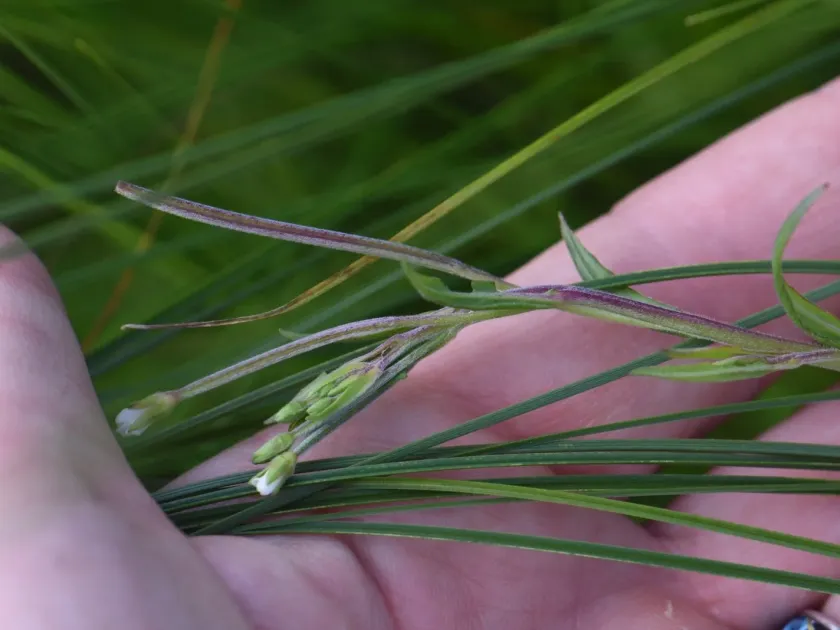
The botanical structure of the marsh willowherb includes a slender, often reddish stem that can reach heights of 60 centimeters. Its leaves are linear or narrow-lanceolate, often having rolled-under margins, which is a structural adaptation to high humidity and waterlogged conditions.
Flowering occurs from mid-summer through early autumn. The flowers are small, usually pale pink or white, and feature the characteristic four-petaled structure typical of the willowherb genus. Following pollination, the plant produces elongated seed capsules containing seeds with tufts of hair for wind dispersal.
While not a commercial crop, the marsh willowherb is valued for its ecological role in stabilizing wetland substrates. It is sometimes included in restoration projects aimed at preserving the biodiversity of riparian zones and natural freshwater habitats.
Main diseases and pests
The primary threat to marsh willowherb populations is habitat destruction, particularly drainage projects that lower water tables. Because the plant is physiologically adapted to wetland conditions, any significant drying of the soil leads to rapid decline and mortality.
Fungal diseases such as powdery mildew can affect the plant during periods of high humidity combined with poor air circulation. While often not fatal, these infections reduce the plant's overall vigor and can inhibit successful seed production during the growing season.
Herbivores and insects, including various leaf-eating beetles, may graze on the foliage. Although the marsh willowherb has a robust rhizomatous root system that allows it to recover from moderate herbivory, extensive damage during early growth stages can be detrimental.
Succession by more aggressive vegetation, such as woody shrubs and trees, represents a long-term threat. As a wetland dries or begins to transition into a shrubland, the marsh willowherb is often outcompeted for sunlight and space by larger, more shade-tolerant species.
Chemical contamination of aquatic environments, including runoff from industrial or agricultural areas, poses a significant risk. The plant's root system is sensitive to shifts in water chemistry, and pollutants can disrupt the nutrient uptake necessary for the plant's survival in boggy soil.