
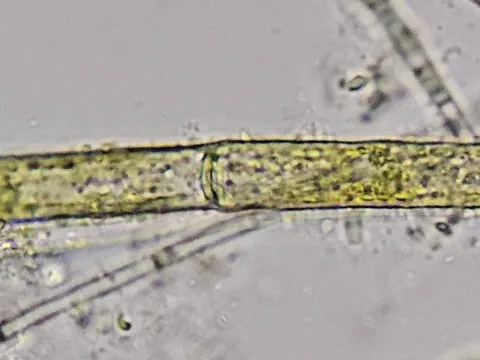
Oedogonium
Oedogonium
Oedogonium is a genus of filamentous green algae belonging to the Oedogoniaceae family. These organisms are typically found in freshwater habitats, often attached to submerged aquatic plants, rocks, or other solid surfaces in stagnant or slow-moving water bodies.
What the section contains

Oedogonium
The successful growth of Oedogonium depends on adequate light intensity, as it is a photosynthetic organism. Photoperiod and light spectrum play a significant role in determining the biomass yield, making controlled light environments essential for industrial-scale cultivation.
Temperature management is critical, with optimal growth occurring in the 15 to 25 degrees Celsius range. Deviations from these thermal limits can trigger the formation of reproductive structures rather than vegetative filaments, which is undesirable for biomass production.
Nutrient availability, particularly nitrogen and phosphorus, is the primary driver of growth. In agricultural systems, these nutrients are often sourced from agricultural wastewater or aquaculture discharge, making Oedogonium an effective tool for nutrient recovery.
Water quality parameters, such as pH (typically kept between 7 and 8) and dissolved CO2 levels, must be strictly monitored. Consistent agitation or aeration is required to ensure that all filaments receive sufficient nutrients and to maintain high gas exchange rates throughout the cultivation unit.
Oedogonium is highly valued in environmental biotechnology for its ability to remediate wastewater. By rapidly absorbing excess nutrients, it prevents eutrophication in natural water bodies while simultaneously producing harvestable biomass.
The biomass of Oedogonium serves as a valuable organic fertilizer. Once processed and composted, it releases essential plant nutrients back into the soil, improving soil structure and enhancing the nutrient uptake efficiency of various agricultural crops.
As a feed ingredient, Oedogonium offers a rich profile of proteins and lipids. It is increasingly studied as a sustainable supplement for aquaculture and livestock, helping to reduce reliance on traditional protein sources like fishmeal or soybean meal.
The energy potential of this alga is another key direction. Through anaerobic digestion, Oedogonium biomass can be converted into biogas (methane), offering a renewable energy solution for farms that integrate algae cultivation into their operations.
Extraction of high-value bio-compounds, such as specific polysaccharides and natural pigments, is a burgeoning field. These substances find applications in the cosmetic and pharmaceutical industries, providing a significant economic incentive for high-purity cultivation.
One of the main challenges in cultivating Oedogonium is the infestation of epiphytic micro-organisms and fungi, such as chytrids. These parasites can rapidly destroy entire batches of algae by infiltrating the cell walls and disrupting their life cycle.
Grazing by aquatic invertebrates, including daphnia, copepods, and certain gastropods, can decimate algae crops if left unchecked. Implementing fine-mesh filtration at the water intake is a standard preventative measure in professional phycoculture.
Competition from other opportunistic algal species or cyanobacteria is a persistent threat. If conditions are not precisely maintained, invasive species can outcompete the desired Oedogonium strain, leading to a loss of yield and culture stability.
Environmental stress, such as sudden temperature spikes or heavy metal toxicity, can induce a rapid cellular collapse known as lysis. This process causes the filaments to break apart, releasing intracellular contents into the water and leading to massive culture death.
Insufficient circulation often leads to low dissolved oxygen levels at the bottom of cultivation tanks. This hypoxic environment encourages the growth of pathogenic bacteria, which can accelerate the decay of the algae and compromise the safety of the final product.