
Oedogonium cardiacum
Oedogonium cardiacum
Description
Sowing dates
In its natural habitat, Oedogonium cardiacum does not require sowing as it is an autochthonous inhabitant of freshwater bodies. However, during artificial cultivation in laboratory or industrial settings, inoculation is performed by introducing thallus fragments into the nutrient medium.
The optimal time for initiating the culture is during the spring, when daylight hours begin to increase, stimulating photosynthetic activity. Specific growth media, such as Bold's Basal Medium, are used to ensure the necessary mineral balance.
The temperature range for the start of active vegetation should remain stable between 18 and 22 degrees Celsius. It is crucial to maintain sterility during the initial stages to prevent the dominance of other microalgae or cyanobacteria species.
The frequency of culture renewal depends on biomass intensity; typically, the renewal cycle ranges from 2 to 4 weeks. Using pre-prepared stock cultures allows for more predictable results.
When controlling populations in aquaculture, it is important to account for life cycle phases, including the formation of oospores, which can persist in sediment, waiting for favorable conditions to germinate.
Growing requirements
Oedogonium cardiacum belongs to the Oedogoniaceae family and is an unbranched filamentous alga. It is a typical inhabitant of freshwater communities, preferring stagnant or slow-moving waters rich in organic matter.
For normal development, the plant requires well-lit areas of the water body. Under laboratory conditions, light intensity should be approximately 2000–4000 lux with a 16/8-hour light/dark cycle to stimulate metabolism.
Requirements regarding water chemistry involve the content of nitrogen and phosphorus. An increased level of these elements often triggers rapid biomass growth, which is a key factor in agricultural phycology.
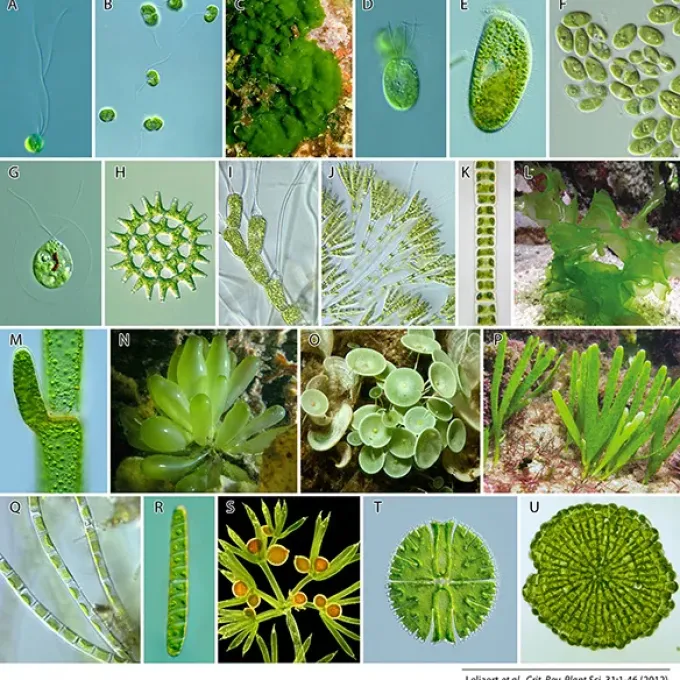
The structure of the thallus consists of a chain of cylindrical cells, each containing a single reticulated chloroplast. This is a fundamental botanical feature that allows for the efficient use of solar energy.
The algae is sensitive to sharp changes in environmental pH, therefore, for stable growth, the level is maintained within the 7.0–8.2 range. Stability of the environment is the key to culture health and high yield.
Yield
Productivity of the culture in industrial cultivation is assessed by the volume of fresh biomass. Under optimal conditions, the cell division rate of Oedogonium ensures rapid expansion of the water surface coverage.
The main area of economic use is obtaining biomass for feed additives or as an object for scientific research in the field of plant development biology. The culture is also used as an indicator of water purity.
Biomass yield correlates directly with the availability of dissolved carbon dioxide and mineral salts. In industrial photobioreactors, it is possible to obtain up to several grams of dry matter per liter of volume per week.
To increase yields, water bubbling methods are applied, which improve gas exchange and prevent filament matting. This also promotes uniform illumination of all layers of the culture.
Harvesting is performed mechanically, using nets with a specific mesh size, which allows for the efficient extraction of the filamentous mass from the water column.
Main diseases and pests
The main threat to culture stability is infection by chytrid fungi, which parasitize Oedogonium cells, causing their destruction. This can lead to a sharp decline in productivity.
Competition from other filamentous algae species, such as Spirogyra or Cladophora, can suppress the Oedogonium cardiacum population. They capture food resources faster, displacing the target species.
Pollution of the environment with toxic heavy metals or excess herbicides used in nearby agricultural farms has a detrimental effect on the physiology of this alga.
Small crustaceans, such as Daphnia, can cause damage by feeding on algal cells, potentially reducing biomass rapidly if their density becomes high.
Biological control methods are used to combat pests and diseases, focusing on maintaining species balance and timely replacement of the nutrient solution.
Harvesting
The harvesting process begins during the phase of maximum vegetative growth, when the filaments reach their greatest length and strength. This allows for the most efficient collection of biomass without losses.
Methods of centrifugation or filtration are used to separate biomass from the culture fluid. For large-scale operations, automated scraper systems are preferred.
After collection, the mass must be processed immediately — rinsed of medium residues and dewatered. Low-temperature drying helps to preserve the nutritional value of the raw material.
For storage purposes, biomass is preserved or frozen, preventing enzymatic decomposition. Proper harvest logistics guarantee high quality of the target product.
The results of each harvest are recorded to evaluate the effectiveness of the culture's growth and to adjust feeding parameters for the next production cycle.