
Boerhavia orbiculifolia
Boerhavia orbiculifolia
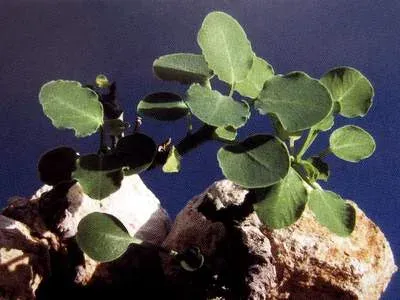
Description
Sowing dates
The sowing of Boerhavia orbiculifolia requires a stable, warm climate to ensure high germination rates. In tropical and subtropical regions, the beginning of the rainy season provides the ideal conditions for seeds to sprout and establish their initial root structures.
Seeds should undergo scarification to overcome dormancy caused by a hard seed coat. Sowing at a depth of 1 to 2 centimeters is optimal, ensuring the seeds are adequately covered to maintain moisture while remaining close enough to the surface for efficient emergence.
Row planting with spacing between 40 and 50 centimeters is recommended to facilitate proper air circulation and sunlight penetration. This spacing helps prevent overcrowding, which is vital for the plant to develop its characteristic orbicular foliage and reach its full growth potential.
Pre-planting soil preparation, including deep tillage and the incorporation of organic matter, is crucial for successful establishment. If starting indoors or in greenhouses, transplanting should only occur after the danger of frost has passed and soil temperatures reach 20 degrees Celsius.
Keeping the fields free of weeds during the early vegetative stage is essential. Mechanical weeding or careful hoeing between the rows should be performed until the plants cover the soil surface, effectively suppressing further weed competition.
Growing requirements
As a member of the Nyctaginaceae family, Boerhavia orbiculifolia thrives in well-drained, sandy or loamy soils. It is sensitive to waterlogging, as excessive moisture leads to root rot and other fungal diseases, making proper drainage a fundamental requirement for cultivation.
The plant is highly photophilous and requires full sun exposure throughout its life cycle. Insufficient light results in etiolation, where the plant develops thin, elongated stems and lower concentrations of its vital medicinal and secondary metabolites.
Optimal temperatures for active growth range between 22 and 30 degrees Celsius. While the species shows some tolerance to temporary heat stress, it prefers consistent conditions without drastic fluctuations in temperature or soil moisture.
Watering should be managed carefully, providing enough moisture to support growth without creating a soggy environment. Drip irrigation is the most efficient method for maintaining consistent soil moisture levels while saving water and preventing unnecessary leaf wetting.
Nutrient management involves applying balanced, slow-release fertilizers during the planting phase and supplemental applications of nitrogen-rich fertilizers if needed for foliage development. Soil pH should ideally be maintained in the neutral range for maximum nutrient availability.
Main diseases and pests
Root rot is the most common threat, especially in soils with poor drainage. To mitigate this risk, farmers must ensure the fields are properly leveled and that no standing water remains after rain or irrigation sessions.
Aphids and spider mites are frequent pests during periods of drought or low humidity. Integrated pest management, including the use of neem oil or biological controls, is highly effective in keeping pest populations below the economic injury level.
Leaf-eating larvae can cause significant damage to young plantations. Regular field scouting is necessary to detect infestations early, allowing for targeted applications of biological insecticides rather than broad-spectrum chemical sprays.
Powdery mildew may manifest as a white coating on the leaves if humidity levels are high and plants are too dense. Improving ventilation through proper spacing is the best way to keep this fungal pathogen in check without relying on fungicides.
Viral diseases represent a serious challenge, as they can be transmitted by insect vectors like whiteflies. Maintaining strict hygiene in the field, including the prompt removal of infected plants, is critical to preventing the spread of viruses throughout the crop.
Harvesting
Harvesting of Boerhavia orbiculifolia is best performed at the peak of vegetative growth, just before the onset of heavy flowering. This stage ensures the highest concentration of desired biochemical constituents within the leaf tissue.
The harvest involves cutting the stems manually or mechanically about 5 to 10 centimeters above the soil line. Using sanitized tools is vital to prevent the introduction of pathogens into the living rootstock, which may promote regrowth if conditions permit.
Post-harvest handling must be swift to prevent fermentation and quality degradation. The harvested material should be transported to a drying facility as soon as possible, ideally in crates that allow for airflow during transit to reduce internal heat buildup.
The drying process should be carried out in a temperature-controlled environment, avoiding exposure to direct sunlight, which can cause oxidation and discoloration. Temperatures should ideally remain below 40 degrees Celsius to preserve the integrity of the plant's active compounds.
Once dried to a moisture content of 12–14%, the product should be packed in airtight, light-proof containers. Proper storage in a cool, dry place ensures that the crop maintains its medicinal properties and market quality for at least one year.