
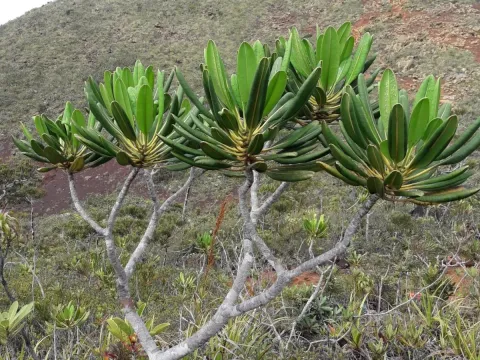
Myodocarpus
Myodocarpus
Myodocarpus belongs to the Araliaceae family, comprising a genus of plants primarily native to New Caledonia. As an endemic genus, its cultivation is mostly focused on specialized collections and botanical research rather than large-scale agricultural production.
What the section contains

Myodocarpus
Propagation is typically carried out via seeds, which require specific environmental conditions to germinate effectively. The ideal temperature for seed incubation ranges between 22 and 25 degrees Celsius, maintained consistently.
The planting medium must be highly porous to ensure excellent drainage. Using a mixture of peat, perlite, and organic material provides the necessary aeration that the developing roots of Myodocarpus require for healthy growth.
For vegetative propagation, stem cuttings are used. These must be kept under high humidity and protected from direct sunlight until a robust root system has developed, which usually takes several weeks of stabilization.
Seedling management involves gradual acclimatization to the nursery environment. Transplanting into larger pots should be done carefully to avoid damaging the delicate root hairs, which are highly sensitive to physical disturbance.
This plant thrives in tropical and subtropical climates, requiring stable temperatures throughout the year. Cold stress is a major factor that can severely impact the physiological health of the plant, often leading to necrosis.
Light requirements are centered on bright, diffused sunlight. Intense, direct solar radiation is detrimental to the leaves, frequently causing scorch marks. Therefore, greenhouse cultivation requires the use of appropriate shading materials.
Soil properties should lean towards slightly acidic to neutral pH levels. The most critical requirement is a well-structured soil profile that prevents waterlogging, as the root system is highly susceptible to hypoxia.
Maintaining high relative humidity is essential for the plant to thrive. In environments with dry air, the use of automated misting systems is recommended to sustain the metabolic processes of the foliage.
Fertilization should be balanced, focusing on the supply of trace elements like iron and magnesium. These nutrients are vital for chlorophyll synthesis and the overall structural integrity of the plant's vascular tissue.
Common pests affecting Myodocarpus include spider mites and mealybugs. These organisms thrive in sheltered environments and can quickly infest the undersides of leaves, causing significant stress to the plant.
Fungal pathogens such as Phytophthora and Pythium pose a high risk, particularly when soil moisture management is compromised. These pathogens can cause rapid root decay, making early diagnosis crucial for plant survival.
Integrated pest management (IPM) strategies are highly effective. This involves a combination of mechanical removal, the use of biological control agents, and, if necessary, targeted chemical applications of systemic insecticides.
To combat fungal infections, fungicides with protective and curative properties should be applied at the first sign of symptoms. Improving air circulation around the plants is also a vital preventative measure.
Regular sanitation of the growing area, including the removal of fallen debris and sterilization of tools, significantly reduces the inoculum potential of soil-borne diseases in a nursery or greenhouse setting.