
Misodendrum
Misodendrum
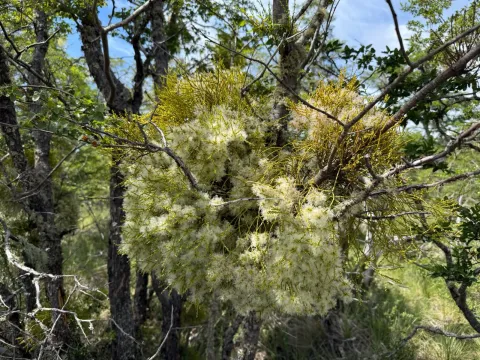
Misodendrum is a genus of semi-parasitic plants classified within the monotypic family Misodendraceae. These organisms are not agricultural crops; rather, they are highly specialized epiphytes that parasitize trees of the Nothofagus genus in the Southern Hemisphere.
What the section contains

Misodendrum
The native range of Misodendrum is restricted to the subantarctic forests of South America, specifically within Argentina and Chile. They flourish in cold, high-humidity environments typical of the Andean and Patagonian mountainous forest zones.
Botanically, Misodendrum species are characterized by the development of specialized root structures called haustoria. These structures penetrate the bark and xylem of the host tree to extract water, nutrients, and minerals directly from the tree's vascular system.
The environmental requirements for Misodendrum are strictly tied to the presence of healthy, mature host trees. As they do not have roots in the ground, their survival depends entirely on the ecological balance of the forest canopy and local humidity levels.
Agricultural techniques are not applied to this species, as it is a wild component of the forest biome. Their propagation is entirely natural, relying on wind dispersal of seeds equipped with specialized plumes to ensure landing on suitable host branches.
The primary threats to Misodendrum populations are linked to the health and abundance of their Nothofagus hosts. Any factor that leads to the death of the host tree directly results in the loss of the parasite colony living upon its branches.
Fungal infections targeting the infection site where the haustoria enter the wood represent a major biological threat. Such infections can block nutrient uptake and force the host tree to shed the infected branch, effectively destroying the parasite.
Climate change poses a long-term risk, as altered precipitation patterns affect the ability of seeds to adhere and germinate on the bark. Periods of prolonged drought significantly reduce the success rate of new infestations in the upper canopy layers.
Competition for surface area with other epiphytes like bryophytes and lichens is a constant struggle. These plants can cover the bark surface, preventing the Misodendrum seeds from reaching the physical point of contact needed for successful penetration.
Habitat loss due to deforestation and landscape alteration in Patagonia represents the most significant threat to the long-term conservation of the genus, as it disrupts the intricate host-parasite relationship developed over evolutionary time.