
Misodendrum oblongifolium
Misodendrum oblongifolium
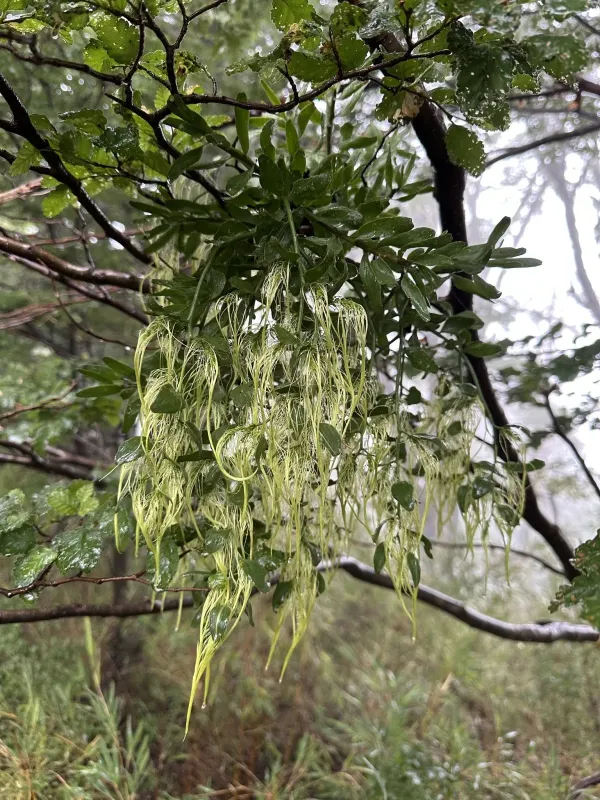
Description
Growing requirements
Misodendrum oblongifolium is a distinct species of obligate parasitic plants within the family Misodendraceae. This plant has evolved to function as a hemi-parasite, relying entirely on trees of the genus Nothofagus to provide the necessary water and essential minerals required for its metabolic processes.
The native distribution of this species is confined to the temperate rainforests of Patagonia, specifically in regions across Chile and Argentina. These environments provide the cool, humid climate and the specific host trees that are vital for the survival of the plant's life cycle.
Botanically, the plant is characterized by a lack of traditional root systems. Instead, it utilizes specialized structures called haustoria to anchor itself onto the branches of its host. These haustoria penetrate the host's bark and reach the vascular tissue, effectively extracting sap to support the parasite's growth.
The environmental requirements for this plant are quite rigid. It thrives in high-humidity areas with moderate temperatures, often occurring in the canopy of host trees where access to light is consistent. It cannot survive as a free-living plant, as its seeds lack sufficient energy reserves to germinate without an immediate host connection.
Reproduction in Misodendrum oblongifolium is highly specialized. The seeds are equipped with plumose appendages, which allow them to be carried by wind currents. Upon landing on a suitable host branch, the seed utilizes a complex mechanism to attach and eventually penetrate the host's protective layers.
Main diseases and pests
The primary threat to the stability of Misodendrum oblongifolium populations is the widespread deforestation of native Nothofagus forests. As the host trees disappear due to habitat loss or logging, the dependent parasite faces local extinction, as it is unable to transition to other tree species.
Pathogenic organisms, particularly fungi that infect the connection site between the parasite and the host, can cause significant damage. Such infections often lead to the death of the specific branch section, which inadvertently causes the detachment and death of the parasite itself.
Climatic stress, such as prolonged droughts in the Patagonian region, significantly affects the health of host trees. When a Nothofagus tree suffers from water stress, it provides less sap to the parasite, leading to stunted growth, reduced flowering, and lower seed production for the Misodendrum.
While not considered a traditional pest, the plant is subject to competition from other epiphytes, such as mosses and lichens, for space on branches. In dense forest ecosystems, this competition for prime light-exposed areas can limit the colonization success of new individuals.
Scientific interest in Misodendrum oblongifolium focuses on its evolution as a specialized parasite. Conservation efforts generally emphasize the protection of the Nothofagus host trees, as the parasite's long-term survival is inextricably linked to the preservation of its habitat and the health of the host tree populations.