
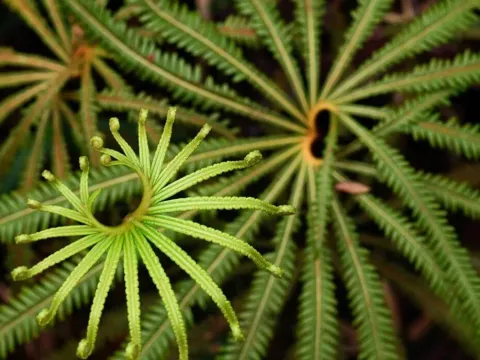
Matonia
Matonia
Matonia is a genus of ferns belonging to the family Matoniaceae, known for its ancient evolutionary origins and distinctive morphology. These plants are native to the tropical regions of Southeast Asia, specifically inhabiting specialized environments like sandstone ridges.
What the section contains
Matonia
Botanically, Matonia is recognized by its unique rhizomatous growth habit and dichotomously branched fronds. Unlike many ground-dwelling ferns, these plants are adapted to specific light conditions and require stable environmental factors to thrive.
Regarding climate, Matonia requires high humidity and steady temperatures between 20°C and 25°C. Exposure to cold drafts or temperatures below 15°C can cause significant physiological damage to the rhizomes and fronds.
The substrate must be well-draining, acidic, and rich in organic matter. A mix consisting of orchid bark, peat, and coarse perlite is typically recommended to prevent root rot, which is a common issue in indoor fern cultivation.
Proper hydration is essential; irrigation should be performed using soft, room-temperature water. Maintaining a high level of ambient humidity is critical for the health of the fronds, often requiring the use of humidifiers or regular misting systems.
The primary threats to Matonia include root pathogens caused by waterlogging of the growing medium. Poor drainage combined with high humidity often creates an environment conducive to Pythium or other fungal infections.
In terms of pests, spider mites and scale insects are the most frequent visitors to Matonia collections. These pests thrive in indoor conditions, particularly if air circulation is insufficient or the surrounding air is too dry.
Control measures must be applied cautiously, as many standard pesticides can cause leaf burn on delicate fern tissue. It is advisable to use horticultural oils or insecticidal soaps in diluted concentrations.
Regular sanitation of the growing area is crucial to prevent the spread of diseases. Removing old, dead fronds promptly helps to reduce the risk of mold growth and provides better airflow around the plant base.
Environmental stress, such as sudden changes in light or temperature, significantly weakens the plant, making it more susceptible to opportunistic pathogens that would otherwise not affect a healthy, well-maintained specimen.