
Green parrot feather
Myriophyllum pinnatum
Description
Growing requirements
Green parrot feather (Myriophyllum pinnatum) is a perennial aquatic plant belonging to the Haloragaceae family. It is a submersed macrophyte typically found in still or slow-moving freshwater habitats, including ponds, lakes, and marshes with nutrient-rich substrate.
The plant originates from North America, with a broad distribution range across various climatic zones. Its biological structure allows it to thrive as an submerged aquatic species, providing essential oxygenation and physical habitat diversity within its natural water bodies.
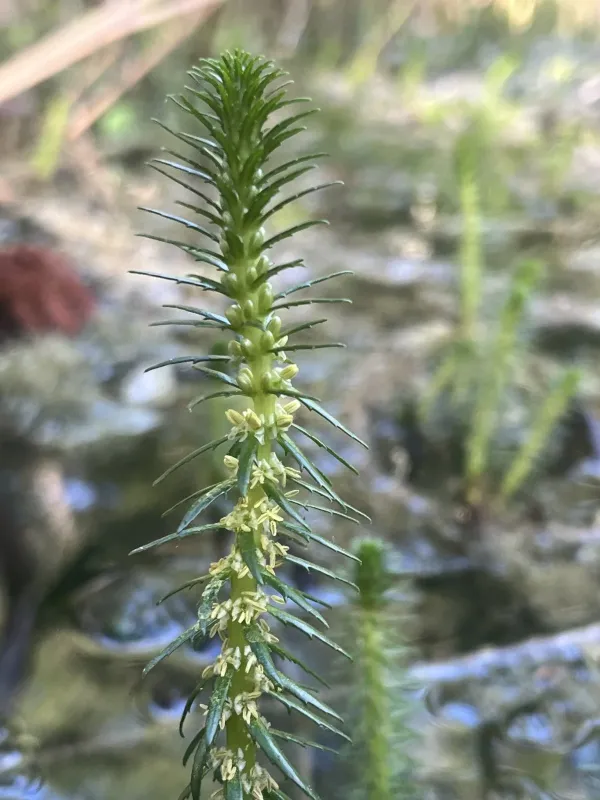
Botanically, the species is characterized by its feathery, pinnate leaves arranged in whorls along flexible stems. This architecture is highly efficient for absorbing CO2 and nutrients directly from the water column, making it a powerful natural filter for aquatic environments.
For successful cultivation, water temperatures should ideally range between 20°C and 28°C. The plant requires moderate to high levels of light intensity to maintain its characteristic bushy appearance; insufficient lighting often results in etiolation and premature leaf drop.
The substrate should be fine-grained and nutrient-rich, as the root system plays a role in anchoring the plant and absorbing secondary minerals. Supplemental CO2 injection and iron-rich fertilizers significantly enhance growth rates and color density in intensive cultivation settings.
Main diseases and pests
Primary threats include infestations of hair algae or cyanobacteria, which can smother the finely divided leaves and inhibit photosynthesis. Additionally, the plant is susceptible to stress caused by sudden changes in water hardness or high salinity, which disrupts cellular osmoregulation.
Harvesting
The primary horticultural application of Myriophyllum pinnatum is in the aquarium and water gardening industry. It serves as an excellent foreground or midground plant, depending on the pruning techniques applied to control its height and volume.
Harvesting for commercial distribution or pond maintenance involves trimming apical shoots, which root easily in aquatic soil. Regular pruning is necessary not only for density control but also to stimulate lateral branching, creating a fuller, more aesthetically pleasing plant colony.