
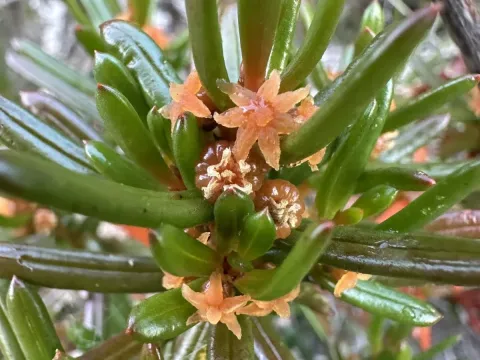
Gyrostemon
Gyrostemon
Gyrostemon is a genus of shrubs and small trees belonging to the family Gyrostemonaceae. These plants are uniquely adapted to the harsh environmental conditions characteristic of the Australian arid zone.
What the section contains

Gyrostemon
Originating from Australia, the genus is well-distributed across sandy plains and scrublands, showcasing remarkable physiological endurance in extremely dry habitats.
Botanically, Gyrostemon species are known for their linear or needle-like leaves, which are an evolutionary adaptation to minimize water loss through transpiration.
The cultivation of these plants requires highly porous, sandy soils with excellent drainage. They are sensitive to waterlogged conditions, which typically lead to rapid root decay.
While not a traditional food crop, Gyrostemon species are valued in ecological restoration projects and specialized xeriscaping, offering stabilization for loose soils in arid climates.
The most significant threat to Gyrostemon health is root rot, which typically develops when soil moisture levels exceed the plant's natural tolerance limit.
Insects such as leaf-eating beetles can cause substantial damage to the foliage, especially during the active growth phases in the spring season.
Mite infestations are a concern in environments where the air is consistently dry and stagnant, leading to premature leaf drop and stunted growth.
Fungal diseases, including various forms of wilt and leaf spot, are prevalent in greenhouses where airflow is insufficient to maintain plant vigor.
Competition from aggressive opportunistic weeds is a major limiting factor in early establishment, necessitating rigorous manual weeding during the initial planting phase.