
Dalbergia odorifera
Dalbergia odorifera
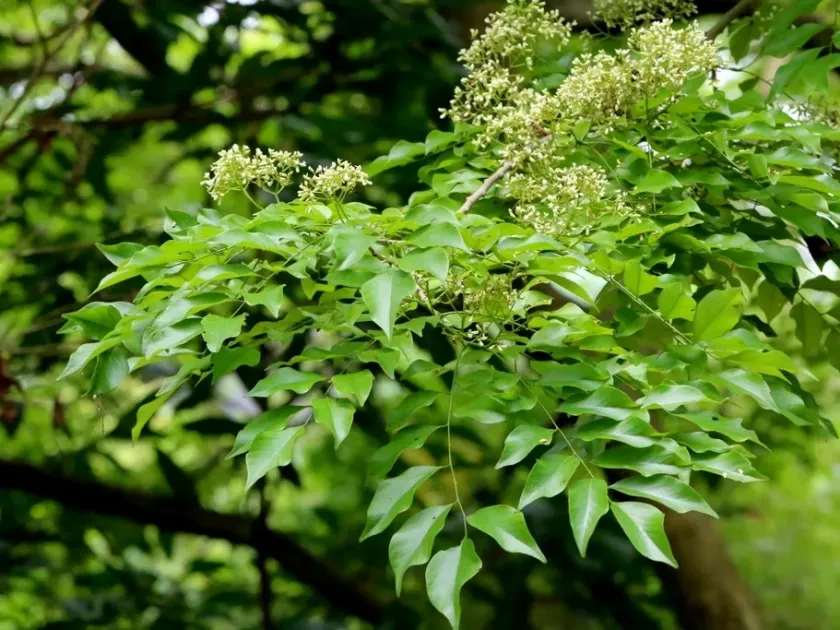
Description
Sowing dates
Propagation of Dalbergia odorifera is primarily achieved through seeds or vegetative methods such as cuttings. Seeds are collected after the pods, which are leathery legumes, have fully matured, and they typically require stratification to improve germination rates.
Sowing in nurseries is conducted in the spring when soil temperatures reach 20-25 degrees Celsius. Ensuring excellent drainage is critical as seedlings are highly susceptible to root rot caused by waterlogging during the early stages of development.
Transplanting saplings to the permanent site is recommended at the beginning of the rainy season to facilitate better establishment in field conditions. When planting for commercial purposes, a spacing of 3-4 meters is usually maintained to ensure optimal light exposure for all trees.
For vegetative propagation, cuttings should be taken from healthy young shoots during the active growth phase. The application of rooting hormones significantly increases the survival rate of the planting material in greenhouse conditions.
Regular weeding and soil cultivation around the base of the tree are essential during the first years of growth to eliminate competition for nutrients and sunlight with invasive weeds.
Growing requirements
Dalbergia odorifera is a tropical tree belonging to the Fabaceae family that thrives in warm, humid climates. Optimal growth conditions include an average annual temperature ranging from 20 to 28 degrees Celsius and a complete absence of heavy frost.
The plant performs well in deep, well-drained soils with a neutral to slightly acidic pH level. The best growth results are observed in loam and red soils, which are typical of the subtropical regions of East Asia.
This species is light-demanding, meaning that plantations should be established in areas with full sun exposure. In conditions of limited solar radiation, trunk development slows down, which negatively affects the quality and density of the heartwood produced.
Consistent moisture is necessary for the tree to thrive, although it can tolerate short drought periods once the root system is fully established. High atmospheric humidity promotes faster biomass accumulation and overall tree vigor.
Special consideration must be given to selecting a site sheltered from strong winds, as young trees are prone to trunk deformation when subjected to intense, consistent wind currents.
Yield
The primary economic value of Dalbergia odorifera lies in its high-quality timber, globally known as "huanghuali". The process of accumulating valuable essential oils and pigments in the heartwood requires a significant amount of time.
Commercial maturity is reached after 15-20 years, though the highest quality timber is typically harvested from trees aged 30 to 50 years. As the tree ages, the proportion of heartwood increases, which directly enhances the final market value of the product.
Yield is evaluated not only by the timber volume but also by the concentration of extractives, which are highly valued in the pharmaceutical industry. Modern breeding programs focus on developing varieties with accelerated heartwood formation.
Regular agricultural practices, such as balanced potassium fertilization and strategic pruning, are essential to optimize trunk development. Formative pruning ensures the growth of a straight trunk with minimal knot defects.
The long-term economic profitability of growing this culture remains exceptionally high, positioning it as a prime target for strategic investments in sustainable forest agriculture.
Main diseases and pests
The primary threats to healthy plantations include fungal diseases of the root system, often triggered by poor water management. Improper irrigation can lead to root rot, which may cause widespread mortality in young plantations.
Pests, such as stem borers and leaf-eating beetles, can significantly damage the appearance and overall health of the tree. Consistent phytosanitary monitoring is necessary to detect infestations early and implement biological control methods.
Witches' broom disease, caused by phytoplasmas, can lead to distorted shoot growth and a decline in the tree's vigor. Infected specimens should be removed immediately to prevent the spread of the pathogen to the rest of the plantation.
Weeds pose a serious threat during the first three years of growth, making maintenance of the area between rows crucial. Mulching is a recommended practice to suppress weeds while helping to retain soil moisture.
In the event of an outbreak, it is recommended to use approved systemic fungicides and insecticides, strictly adhering to dosage guidelines and required safety intervals before performing any harvesting or maintenance tasks.