
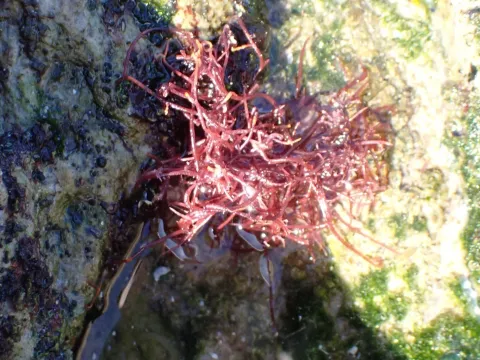
Hypnea
Hypnea
Hypnea is a genus of red algae in the Solieriaceae family, primarily valued for the production of carrageenan. This seaweed is typically found in tropical and subtropical marine environments, attached to rocky substrates or other algae in shallow coastal waters.
What the section contains

Hypnea
The optimal growth environment for Hypnea requires high light intensity and temperatures ranging from 20 to 30 degrees Celsius. Consistent water movement is crucial, as it supplies essential nutrients and prevents the accumulation of silt on the seaweed thallus.
In commercial aquaculture, Hypnea is cultivated using rope or net-based methods submerged in the water column. Nitrogen and phosphorus concentrations in the surrounding water are critical limiting factors for biomass development and require careful monitoring.
Salinity requirements for the species are generally between 25 and 35 ppt. While the seaweed is somewhat adaptable to environmental fluctuations, stable salinity levels are preferred to maximize the rate of photosynthesis and growth efficiency.
Vegetative propagation via fragmentation is the primary method of planting. Farmers tie small cuttings of healthy thalli onto ropes, which then grow and branch out, eventually forming a thick mat that can be harvested repeatedly.
The growth cycle of Hypnea is relatively rapid, typically allowing for a harvest every 45 to 60 days. Productivity depends heavily on the farm's location, water flow conditions, and the density of the seedlings on the supporting frames.
Sustainable yield management involves pruning the plants rather than harvesting the entire biomass. This practice promotes faster regeneration of the remaining plant material and ensures continuous production throughout the farming season.
After harvesting, the seaweed is processed by washing in freshwater to remove salt and epiphytes, followed by sun-drying on platforms. Maintaining the correct moisture content is essential to prevent degradation of the cell wall polymers.
Yield quality is measured by the extraction efficiency of carrageenan. High-quality strains are selectively cultivated to meet the stringent requirements of the food additive and cosmetic industries that rely on this hydrocolloid.
Advanced farming techniques, such as the use of nutrient-rich runoff diversion or integrated multi-trophic aquaculture (IMTA), have shown promise in significantly increasing the overall biomass yield per hectare.
The most common biological threats to Hypnea farms include epiphytic algae and seaweed species that compete for light and space. Regular cleaning of the cultivation ropes is necessary to maintain high growth rates and plant health.
Herbivory by fish and crustaceans can lead to significant crop loss. Using protective mesh enclosures or selecting farm sites with lower populations of grazers is a standard management practice in coastal mariculture.
Environmental stressors such as extreme temperature spikes can cause "ice-ice" disease, where the thalli lose pigment and disintegrate. This condition is often exacerbated by poor water circulation and high organic load in the farm area.
Physical damage from strong currents or storm surges poses a constant threat to the integrity of the offshore structures. Proper engineering and site selection in sheltered, low-energy coastal areas are vital for long-term operational success.
Water quality issues, including industrial pollution and excessive nutrient runoff, can lead to toxic blooms that inhibit growth. Regular testing of the water column is required to ensure the biological safety of the final commercial product.